
Same boxes. Same layout. New doors, new veneer, new counters.
Culver City Kitchen Cabinet Refacing — Dark Walnut to Light Grey Shaker
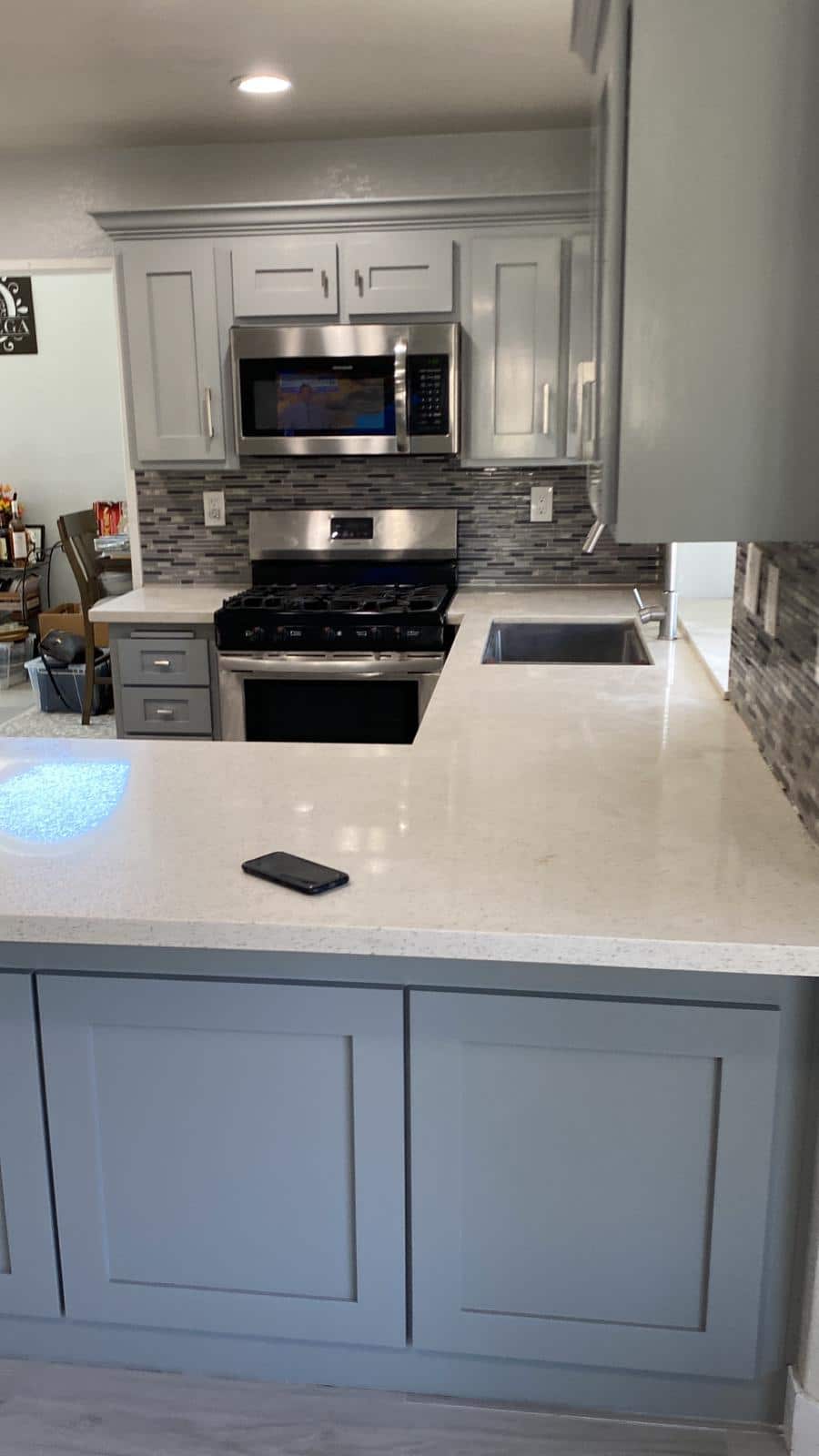
A cabinet refacing project in Culver City — dated dark raised-panel cabinetry refaced with light grey shaker doors and matching veneer over the existing boxes, finished with new quartz countertops, a linear mosaic backsplash, and brushed nickel hardware.
CSLB #1071589Permitted & InspectedGreater Los Angeles
The Project
Project Overview — Culver City, CA
Dark walnut raised-panel cabinetry refaced to light grey shaker — without replacing a single cabinet box or moving the layout.
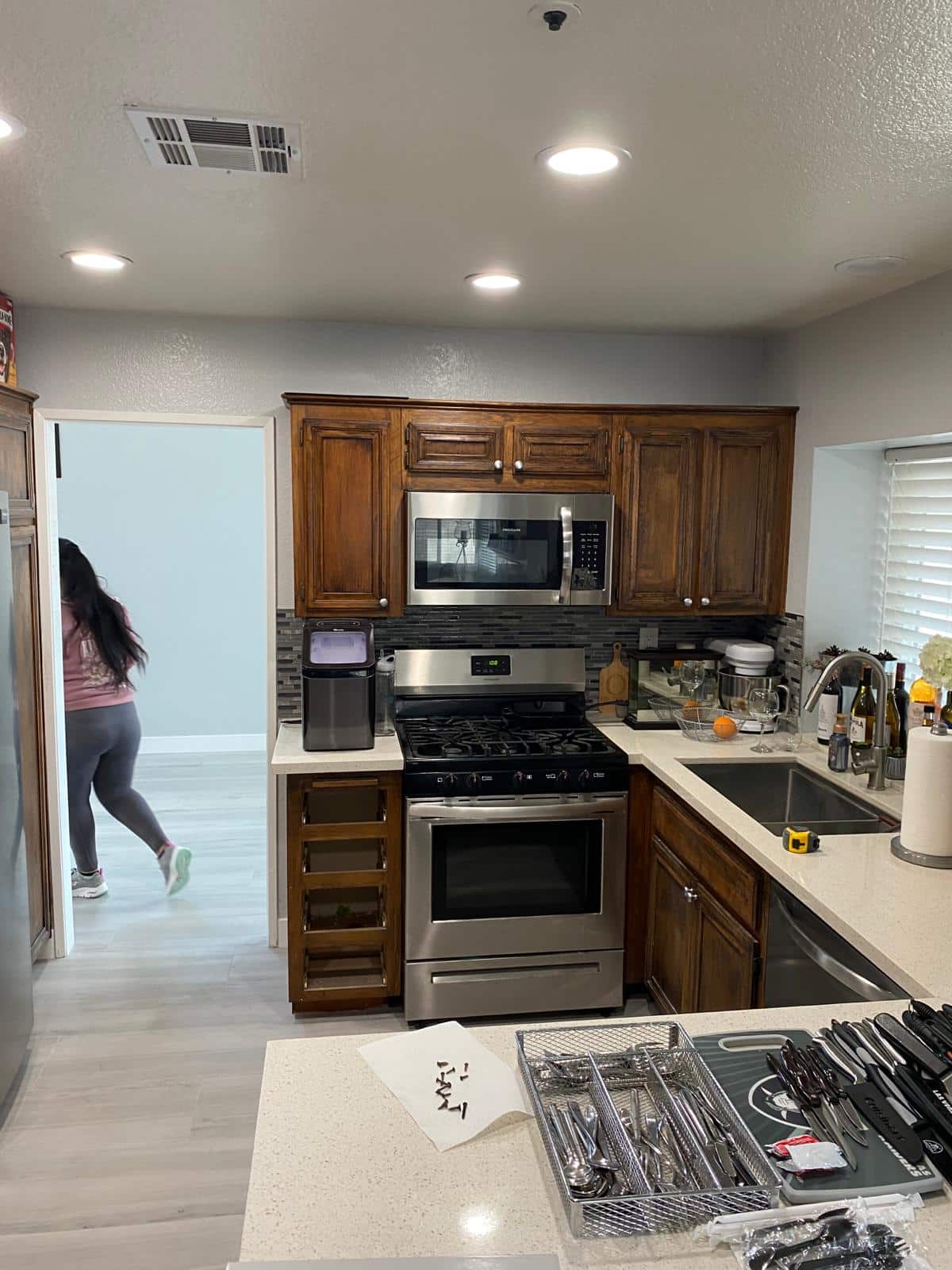
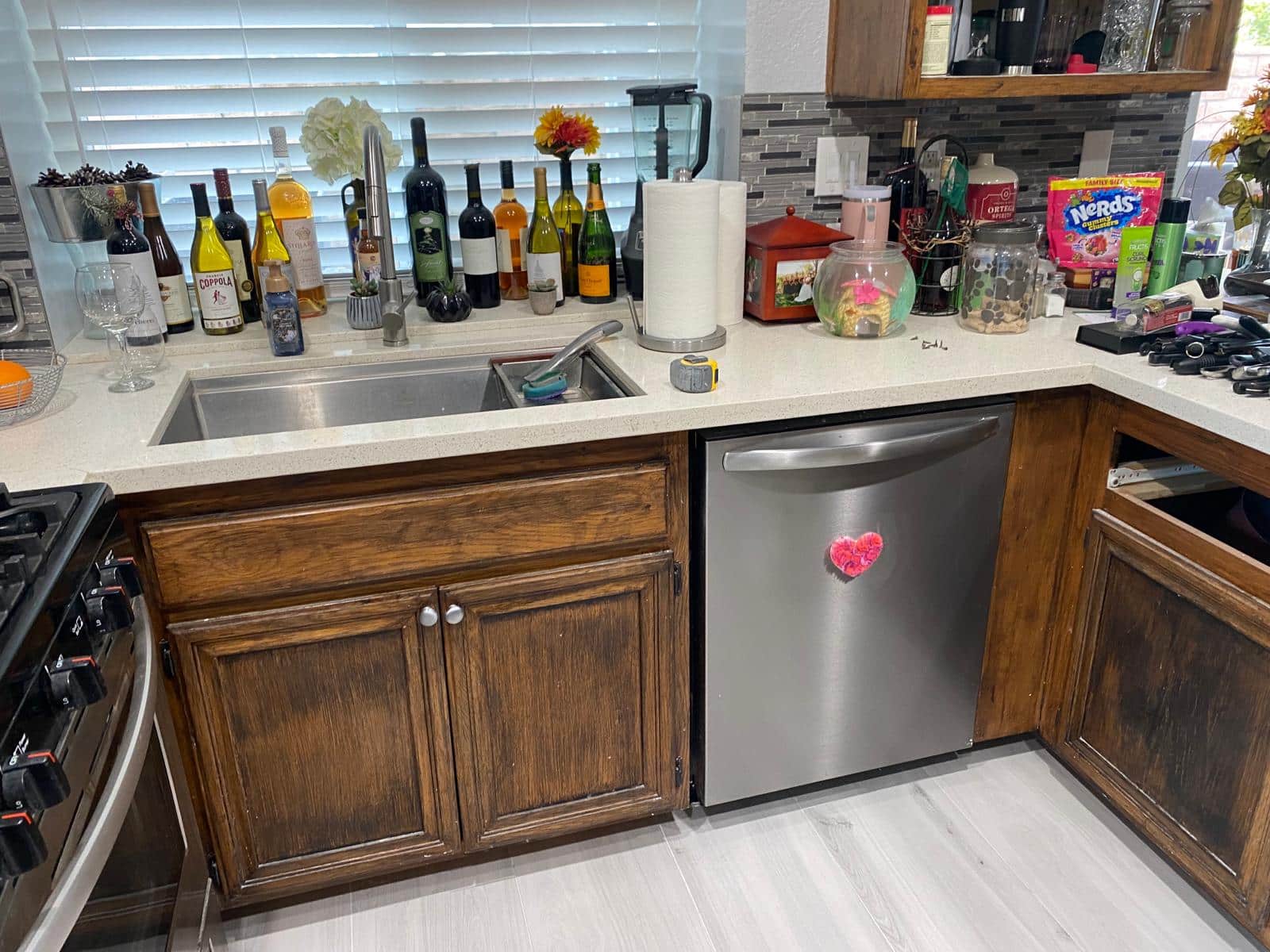
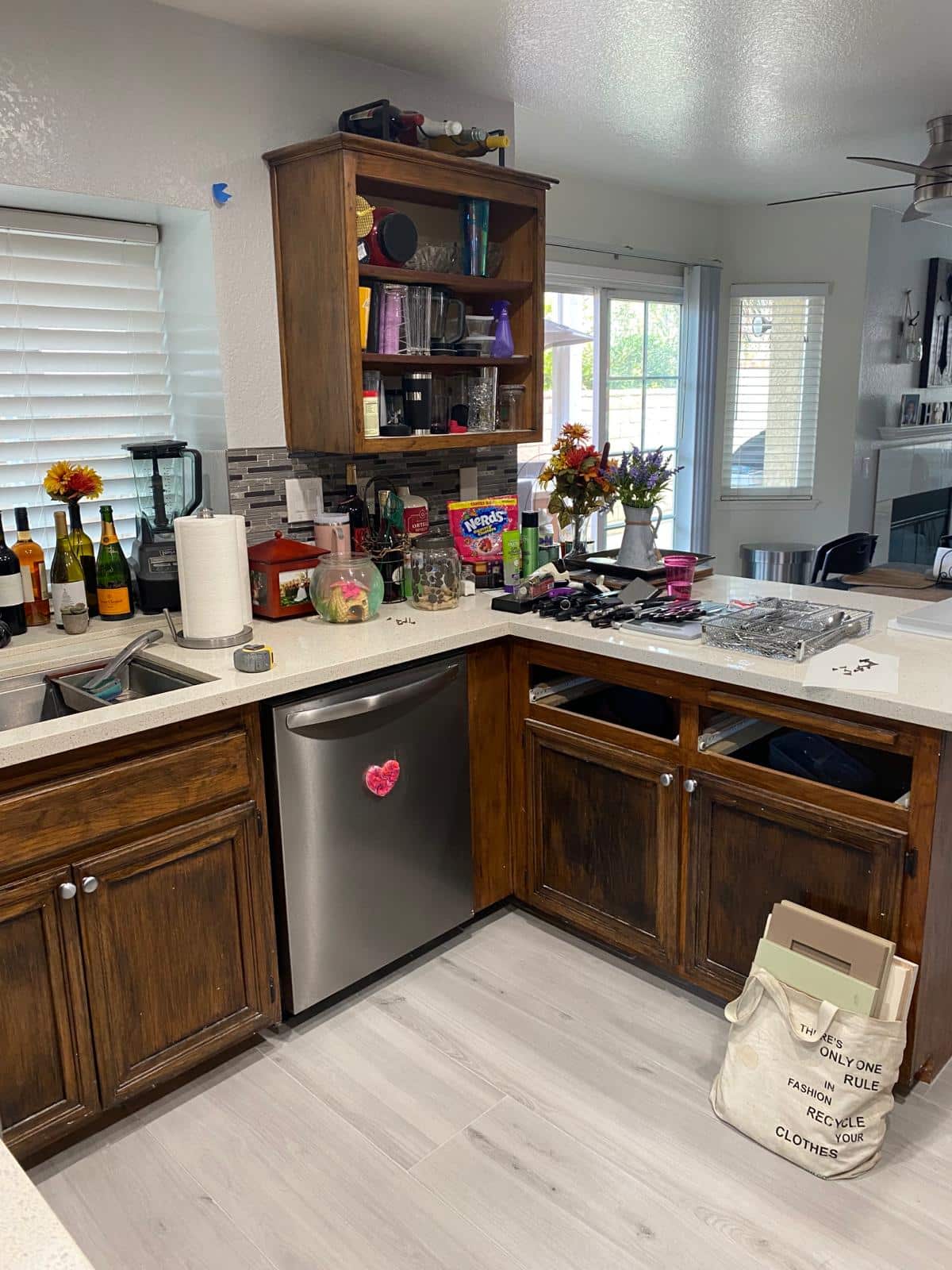
The kitchen started as a heavy, dark-stained raised-panel run: brown wood on every door and drawer, dark uppers closing in the space, and counters and backsplash from the same era. The layout itself worked — an L-shaped run with a peninsula, good storage, and cabinets that were structurally sound.
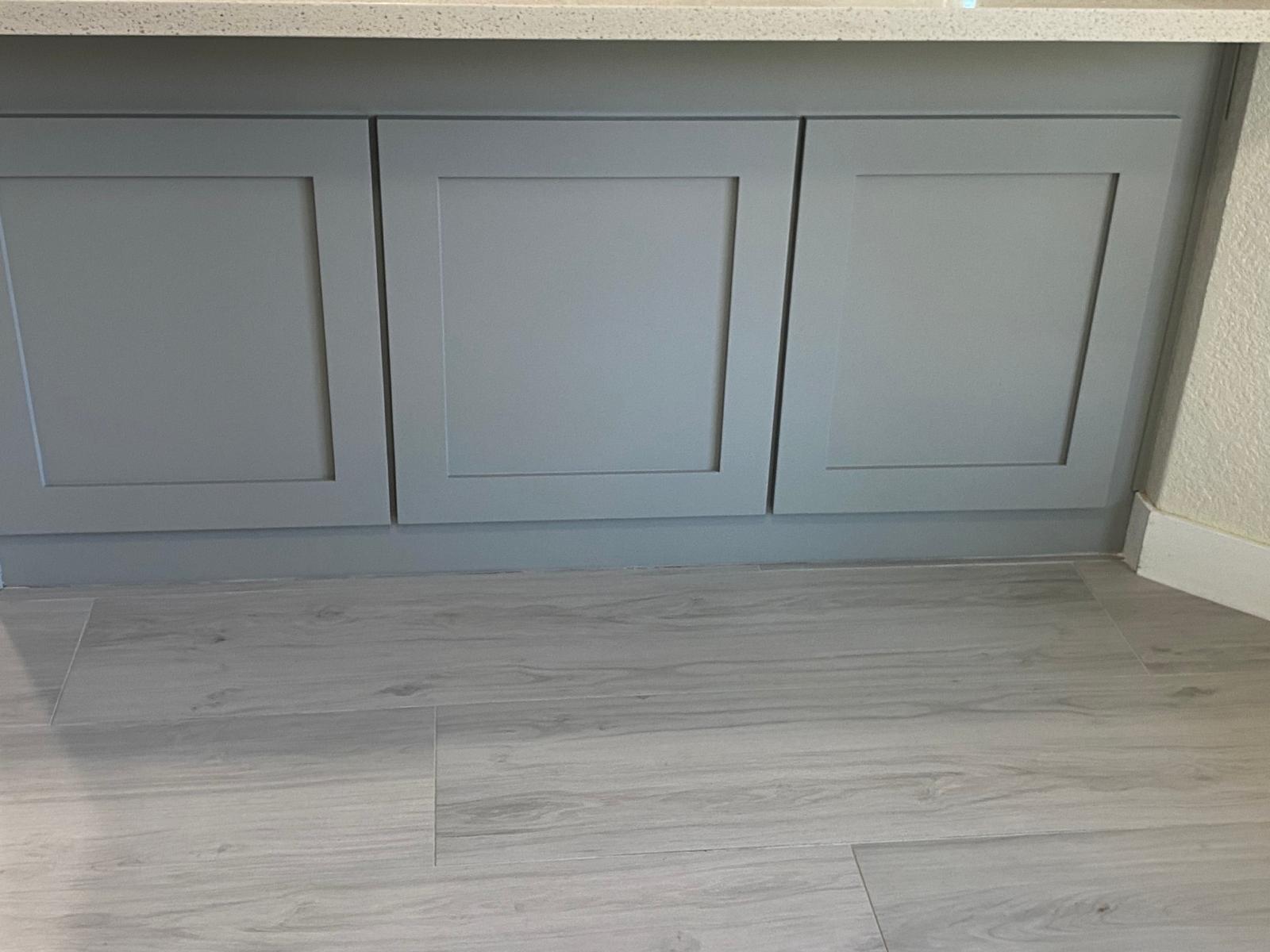
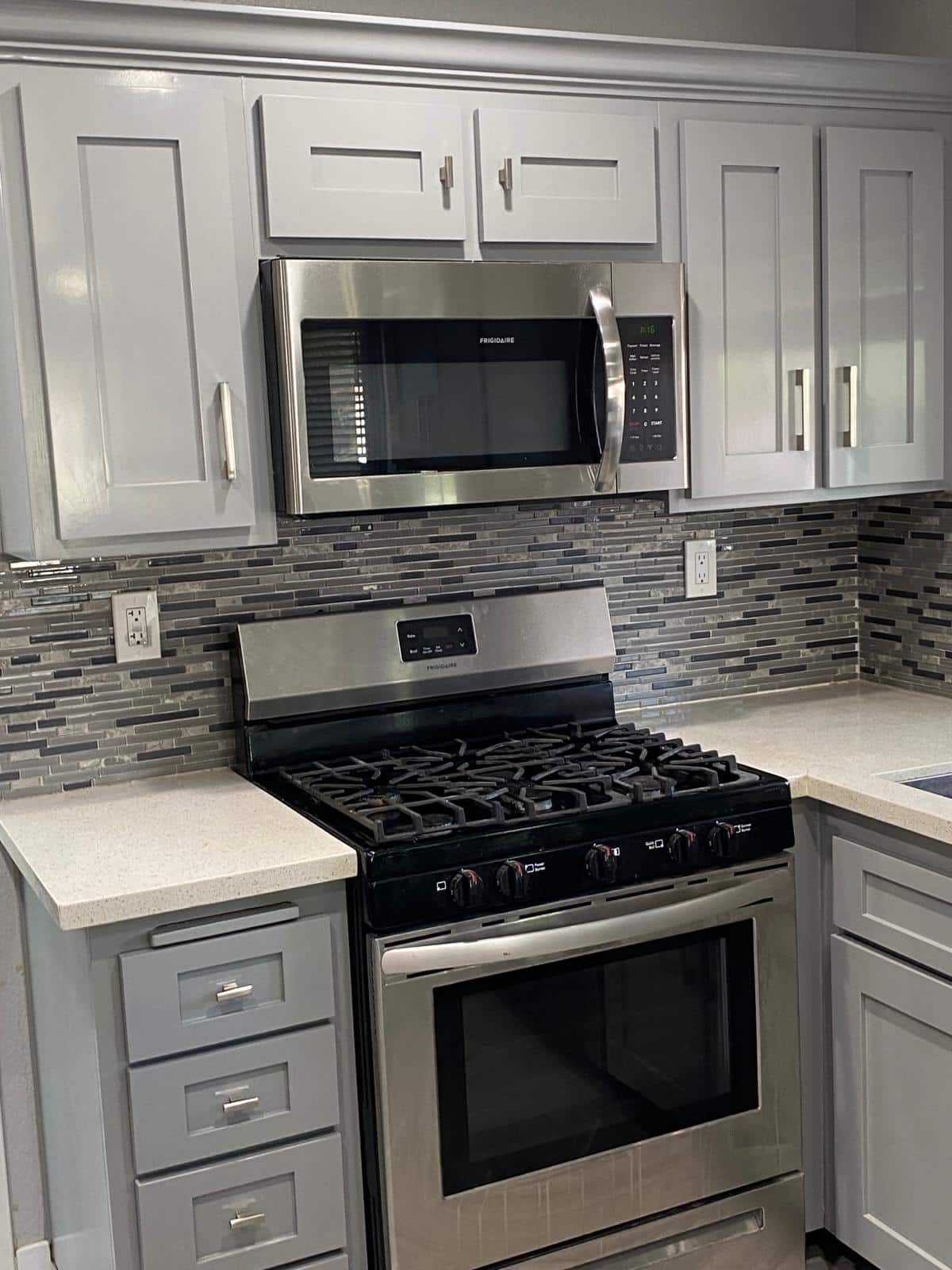
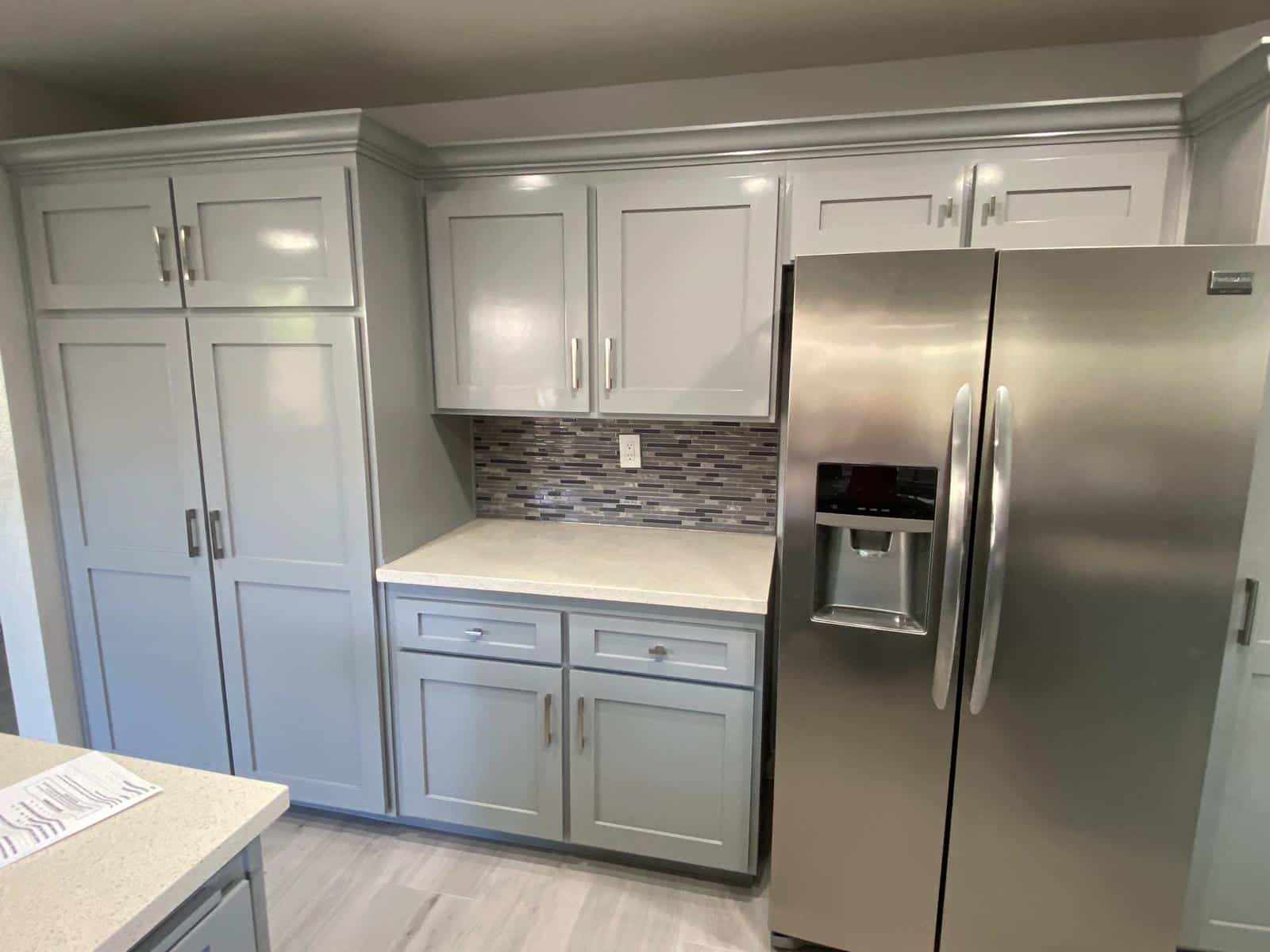
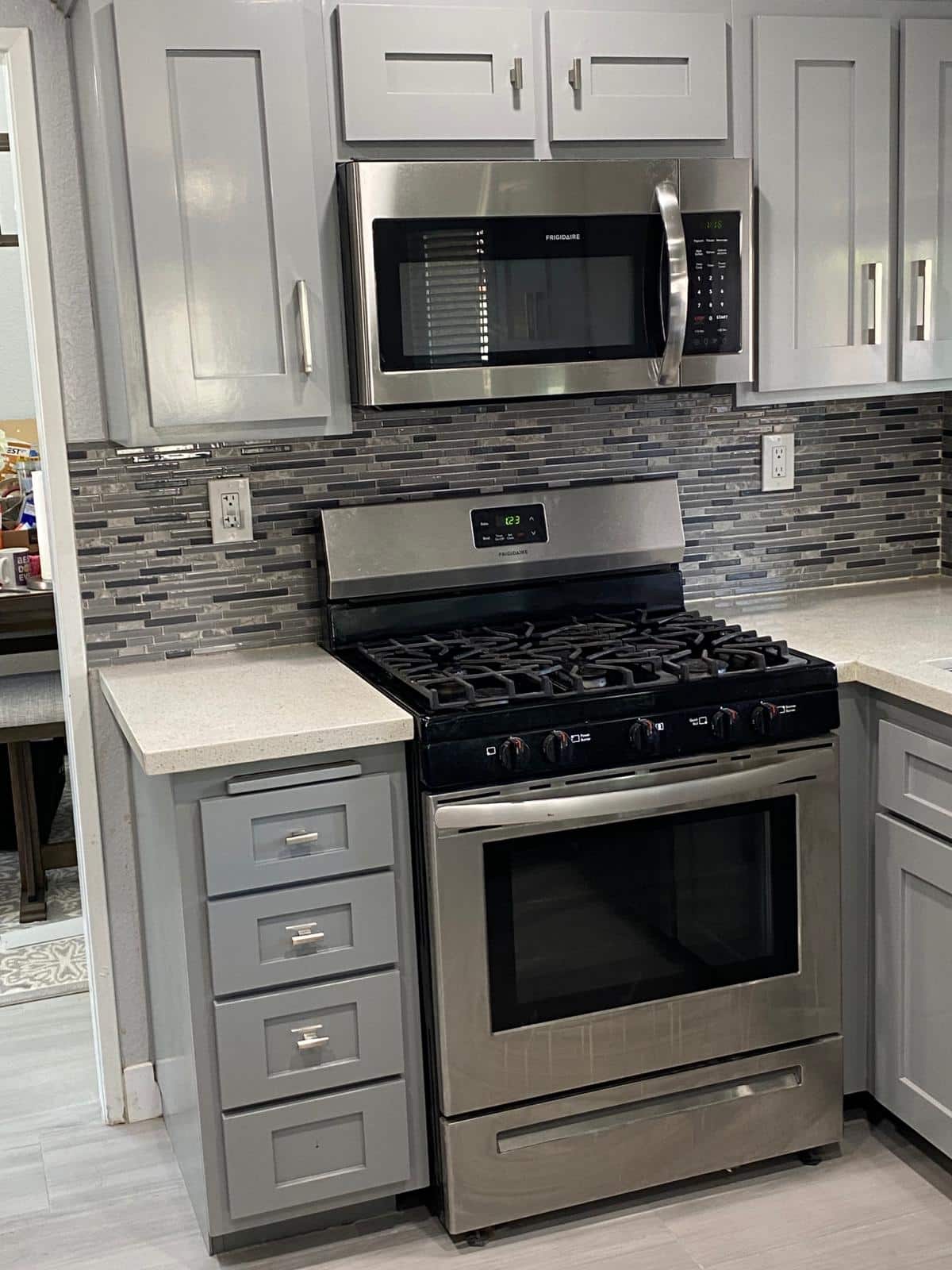
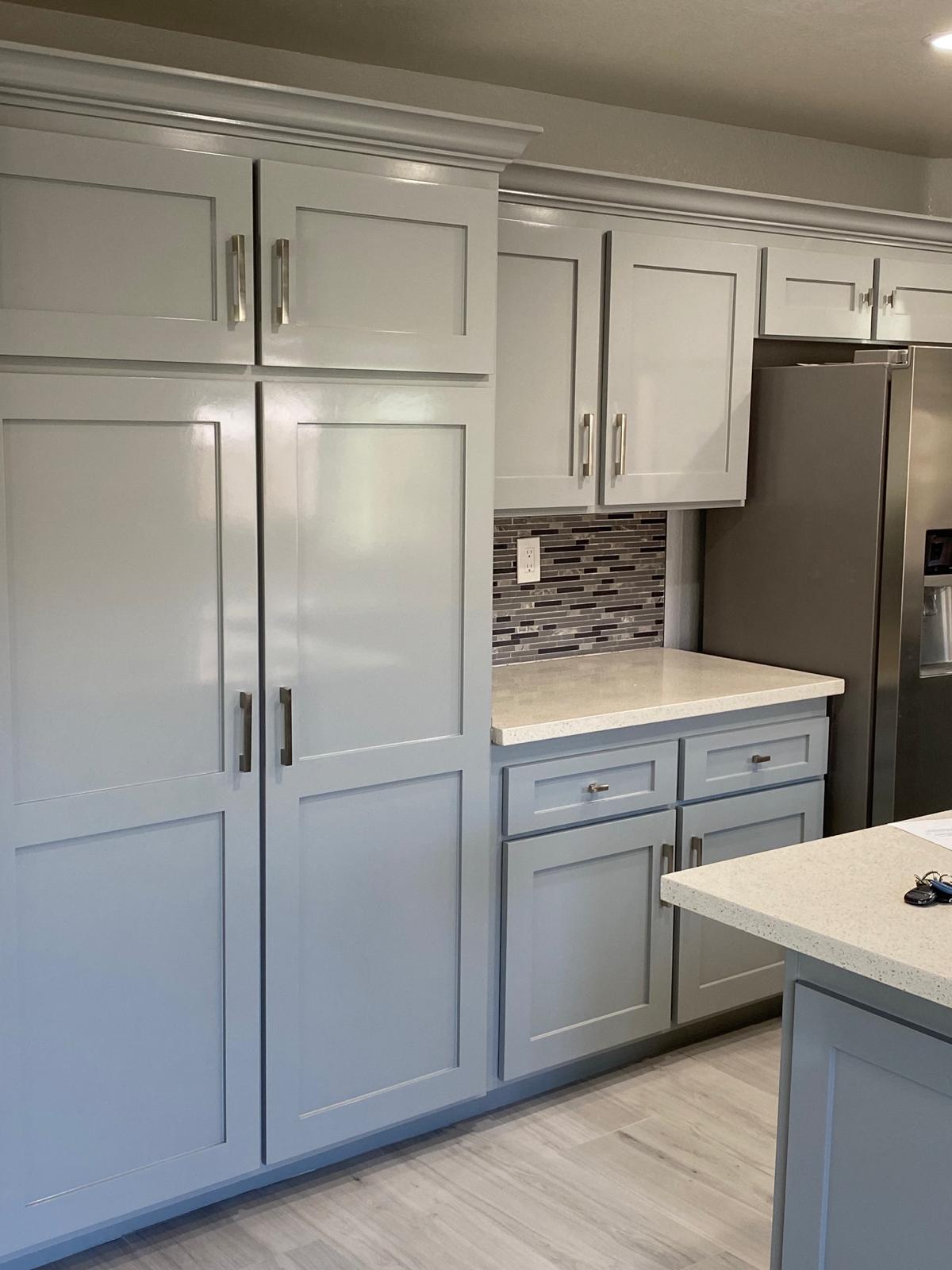
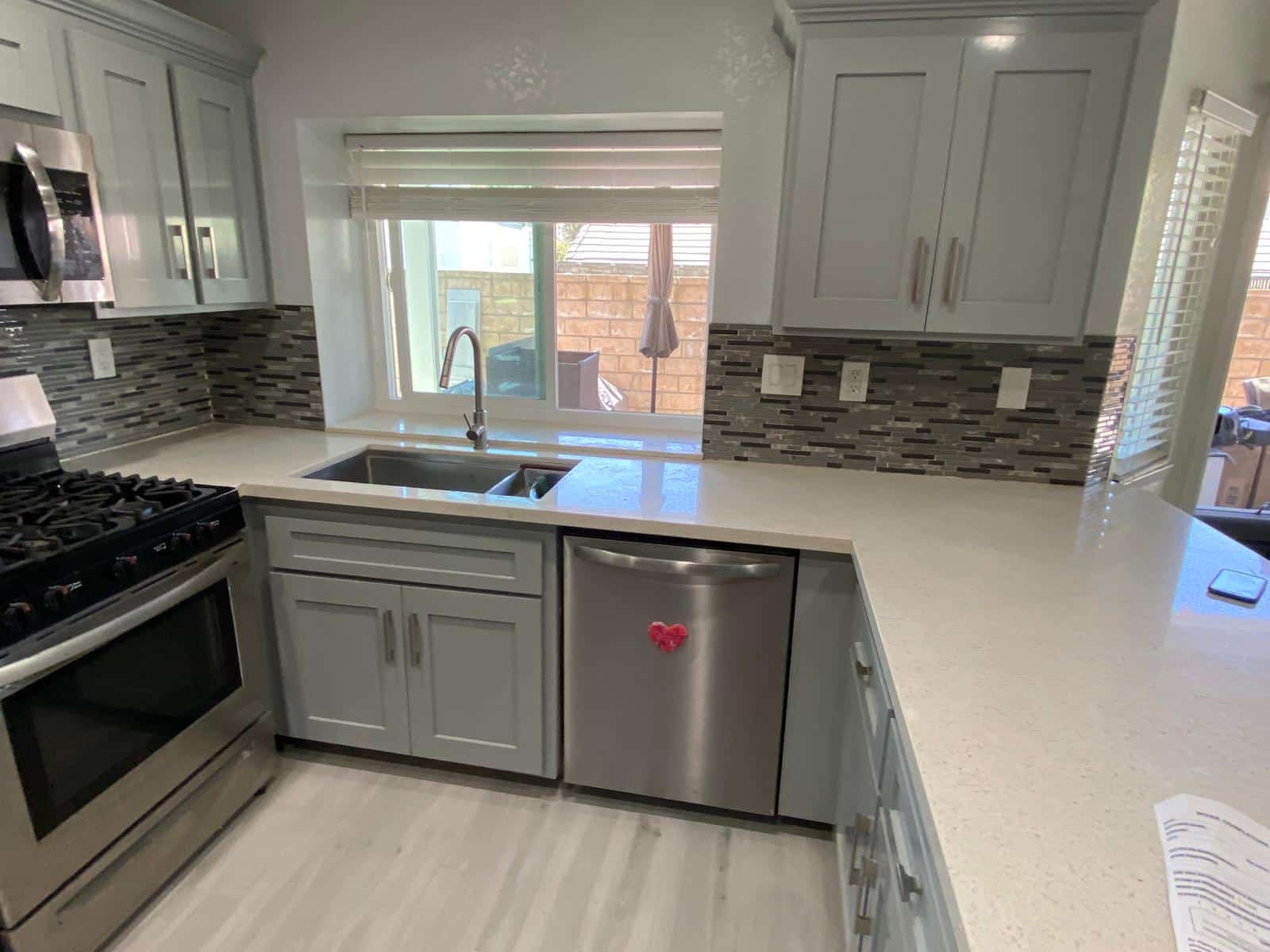
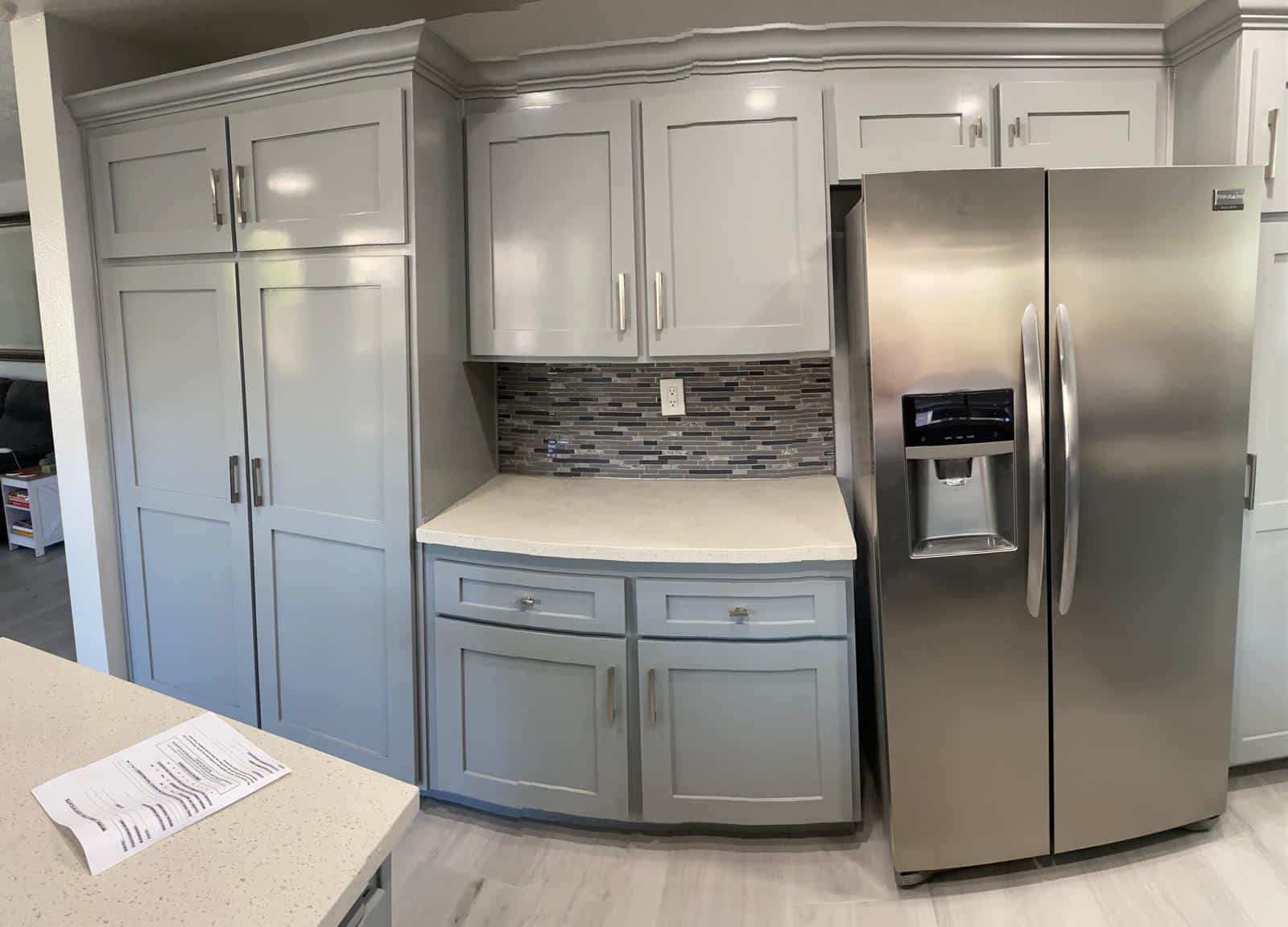
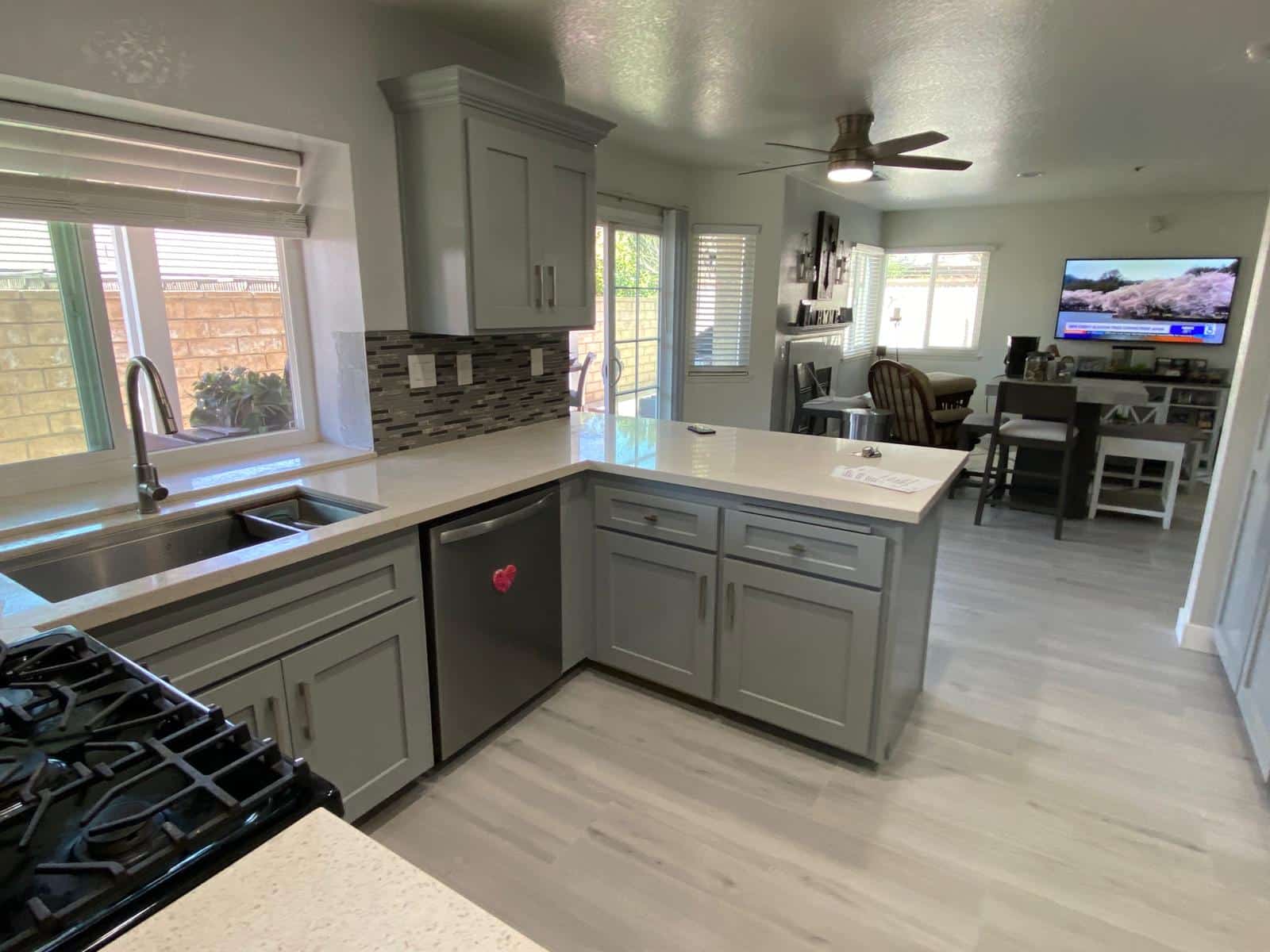
So the boxes stayed. New light grey shaker doors and drawer fronts went on, matching veneer was applied to every visible face frame and exposed cabinet side, and new end panels finished the peninsula. New quartz countertops, a linear mosaic backsplash, and brushed nickel bar pulls completed the change.
The result reads as a new kitchen. What it isn’t is a demolition project — no dumpster, no gutted room, no permit process for a layout that never changed, and no weeks of living without a kitchen while new cabinetry is fabricated and delivered.
The work was completed by US LA Home Remodeling Inc under CSLB License #1071589 — box assessment, door and veneer specification, refacing, countertop templating and installation, backsplash tile, and hardware.
Location
Culver City, CA — Westside Los Angeles
Project Type
Kitchen cabinet refacing
Before
Dark stained raised-panel cabinetry
After
Light grey shaker doors and drawer fronts with matching veneer
Boxes
Existing — assessed, retained, and reused
Counters
New quartz, light with soft veining
Backsplash
Linear mosaic in mixed greys
Hardware
Brushed nickel bar pulls
Layout
Unchanged — no walls moved, no plumbing relocated
Contractor
US LA Home Remodeling Inc — CSLB #1071589
Status
Completed
What We Did
Scope of Work
Assessment first, materials second. No doors were ordered until the condition of every box was confirmed.
- Box condition assessment across the full kitchen before any scope was quoted
- Water-exposure check at the sink run, dishwasher, and refrigerator positions
- Face frame square and anchoring verified before refacing was confirmed as viable
- Removal of all existing doors, drawer fronts, and hardware
- Face frame preparation — cleaning, sanding, and surface correction
- Matching veneer applied to every face frame and exposed cabinet side
- New end panels fitted to the peninsula and exposed cabinet runs
- New light grey shaker doors and drawer fronts hung with new hinges
- New quartz countertops templated to the existing cabinet run
- Linear mosaic backsplash installed to the finished counters
- Brushed nickel bar pulls drilled to consistent centers throughout
- Full alignment pass — every door and drawer adjusted to hang level and close clean
The Challenge
Refacing, Refinishing, or Replacing — Which One This Kitchen Needed
Three different jobs get called the same thing, and picking the wrong one costs either money or the result.
Refinishing means keeping the existing doors and changing their finish — sanding, priming, and repainting what’s already there. It’s the least expensive route and it works well when the door style itself is worth keeping.
Refacing replaces the visible parts — new doors, new drawer fronts, and new veneer over the face frames and exposed cabinet sides — while keeping the existing boxes. It’s the right call when the door style is the problem, which is exactly the case with heavy raised-panel doors in a dark stain. No amount of paint turns that profile into a shaker.
Full replacement removes everything, including the boxes. It’s the only option when boxes are damaged or the layout has to change — and it brings demolition, disposal, fabrication lead time, and often a permit.
This kitchen wanted a flat shaker door in a light colour, and the layout worked as it was. That made refacing the correct answer — but only if the boxes could take it. A box with water damage at the sink run, a face frame out of square, or poor anchoring to the studs will not hold new doors flush, and no amount of good door work fixes it. That’s why the assessment happens before anything is ordered.
The Approach
How We Did It
Assess the boxes, prepare the frames properly, and make the veneer and the doors read as one piece of cabinetry.
The assessment came first: every box checked for water-exposure history around the sink, the dishwasher, and the refrigerator, plus anchoring to studs, face-frame condition, and existing door alignment. Boxes that pass make refacing viable. Boxes that don’t get replaced before anything is ordered — and the homeowner gets that answer before committing.
Doors, drawer fronts, and hardware came off, and the face frames were cleaned, sanded, and corrected. Kitchen cabinetry carries years of cooking residue, and veneer applied over that will lift regardless of how good the material is — preparation is where a refacing job is won or lost.
Matching veneer was then applied to every face frame and every exposed cabinet side, and new end panels were fitted to the peninsula. This is the step that separates a proper reface from a door swap: if the frames and exposed sides still show the old finish, the eye reads old cabinets with new doors on them. Every visible surface has to change.
New shaker doors and drawer fronts were hung on new hinges, then countertops were templated to the existing cabinet run — to the cabinets as they physically sit, not to a drawing — and installed, followed by the backsplash scribed to the finished counter.
Brushed nickel bar pulls were drilled to consistent centers, and the job closed with a full alignment pass: every door and drawer adjusted until it hangs level and closes without binding. On a refacing project that pass is the difference between a kitchen that looks refreshed and one that looks rebuilt.
Materials
Materials and Finish Detail
The doors are a light grey shaker — a flat centre panel with a square frame, which is about as far from a heavy raised-panel profile as a door gets. That profile change is doing as much work as the colour change: raised panels carry shadow lines and visual weight, while a flat shaker reads clean and lets a light colour actually read light.
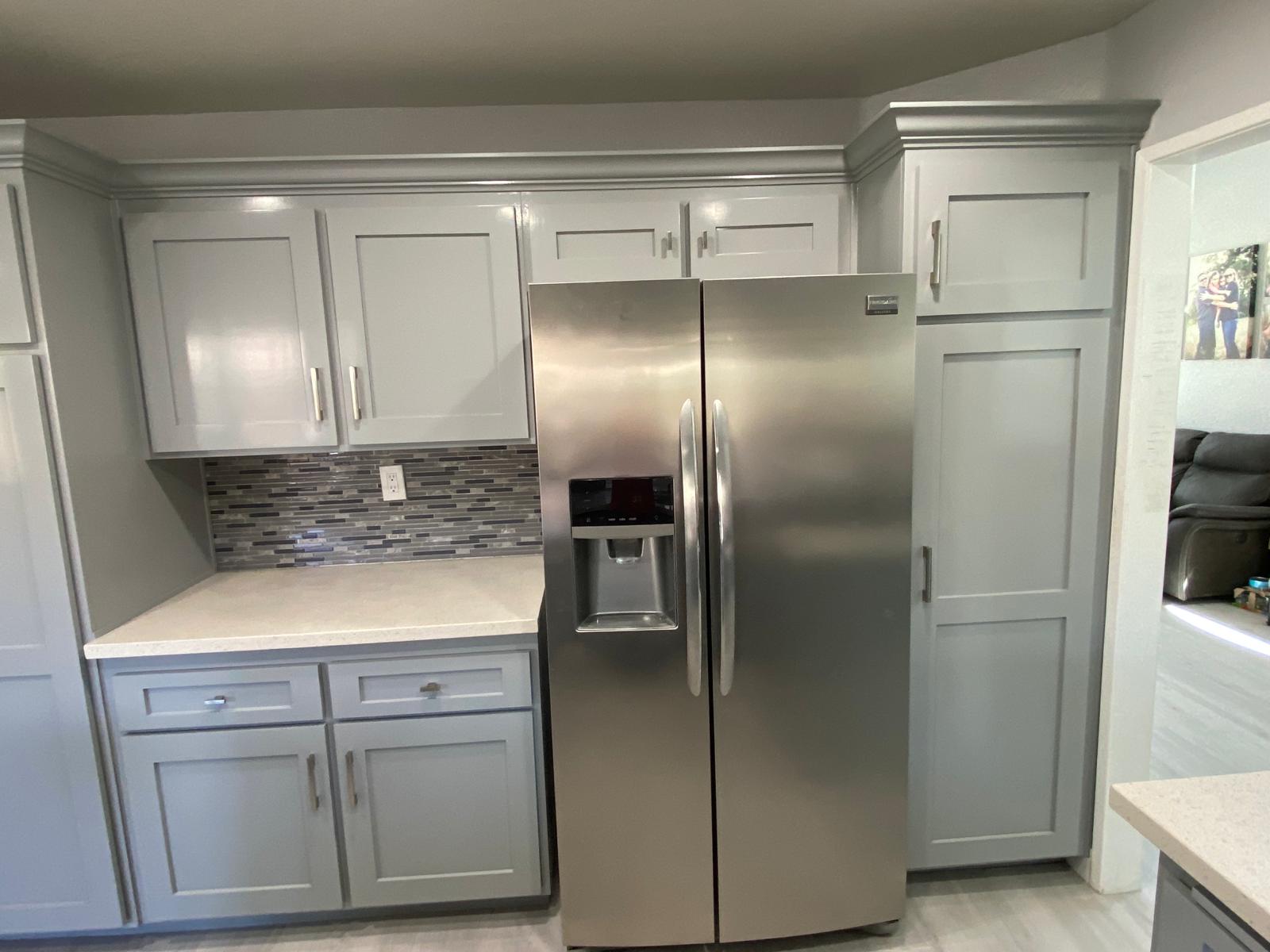
Matching veneer was applied to the face frames and every exposed cabinet side, with new end panels finishing the peninsula. Colour and sheen have to match across veneer and door for the run to read as one piece of cabinetry — that match is the single most visible quality marker on a refacing job.
Counters are a light quartz with soft veining, replacing the original surfaces. Quartz is the practical choice in a working kitchen: no sealing, no etching from citrus or wine, and consistent appearance across a long run.
The backsplash is a linear mosaic in mixed greys, running between the counters and the uppers and full height behind the range. Against light grey cabinetry and a pale counter, a slightly darker mosaic gives the room the contrast it needs — without it, a light-on-light kitchen goes flat.
Hardware is brushed nickel bar pulls throughout, drilled to consistent centers rather than fitted to the old holes. Reusing existing hardware positions is the shortcut that gives a refacing job away; new pulls set to a proper layout are what make the run look like new cabinetry.
The existing stainless appliances were retained and reinstalled. With cabinetry, counters, backsplash, and hardware all changed, appliances in good condition rarely need replacing — and stainless sits comfortably against grey and nickel.
The Area
Cabinet Refacing in Culver City
Culver City sits inside our Greater Los Angeles service area, worked from our office at 5530 Corbin Ave in Tarzana. Cabinet refacing is one of the few kitchen projects that typically does not require a permit, because nothing structural, electrical, or plumbing is being altered — the layout stays, the boxes stay, and only the surfaces change. If a project does move plumbing, add circuits, or change the layout, that crosses into permitted work, and we identify it at the scope stage rather than mid-project.
Kitchens across Culver City and the wider LA basin regularly have cabinetry worth keeping — solid boxes behind dated door styles and finishes. Whether refacing is the right call comes down to the condition of those boxes, which is why the assessment happens before any materials are discussed. For kitchens that need a layout change rather than a surface change, see our kitchen remodeling service.
Culver CityWestside LASherman OaksStudio CityEncinoTarzanaSan Fernando ValleyLos Angeles County
Planning Something Similar?
Update Your Kitchen Without Replacing It
Cabinet refacing, refinishing, and door replacement — starting with an honest assessment of whether your boxes are worth keeping. Tell us your kitchen situation: approximate number of cabinets, any known water history, and what you’re hoping to change.
info@uslaremodeling.com · CSLB #1071589