USLA Home Remodeling logo featuring a blue roof with green vertical stripes and a small blue window, accompanied by the company name and phone number 1-800-508-0259. The design represents residential home improvement and remodeling services. This logo serves as the primary branding for the company's remodeling business.
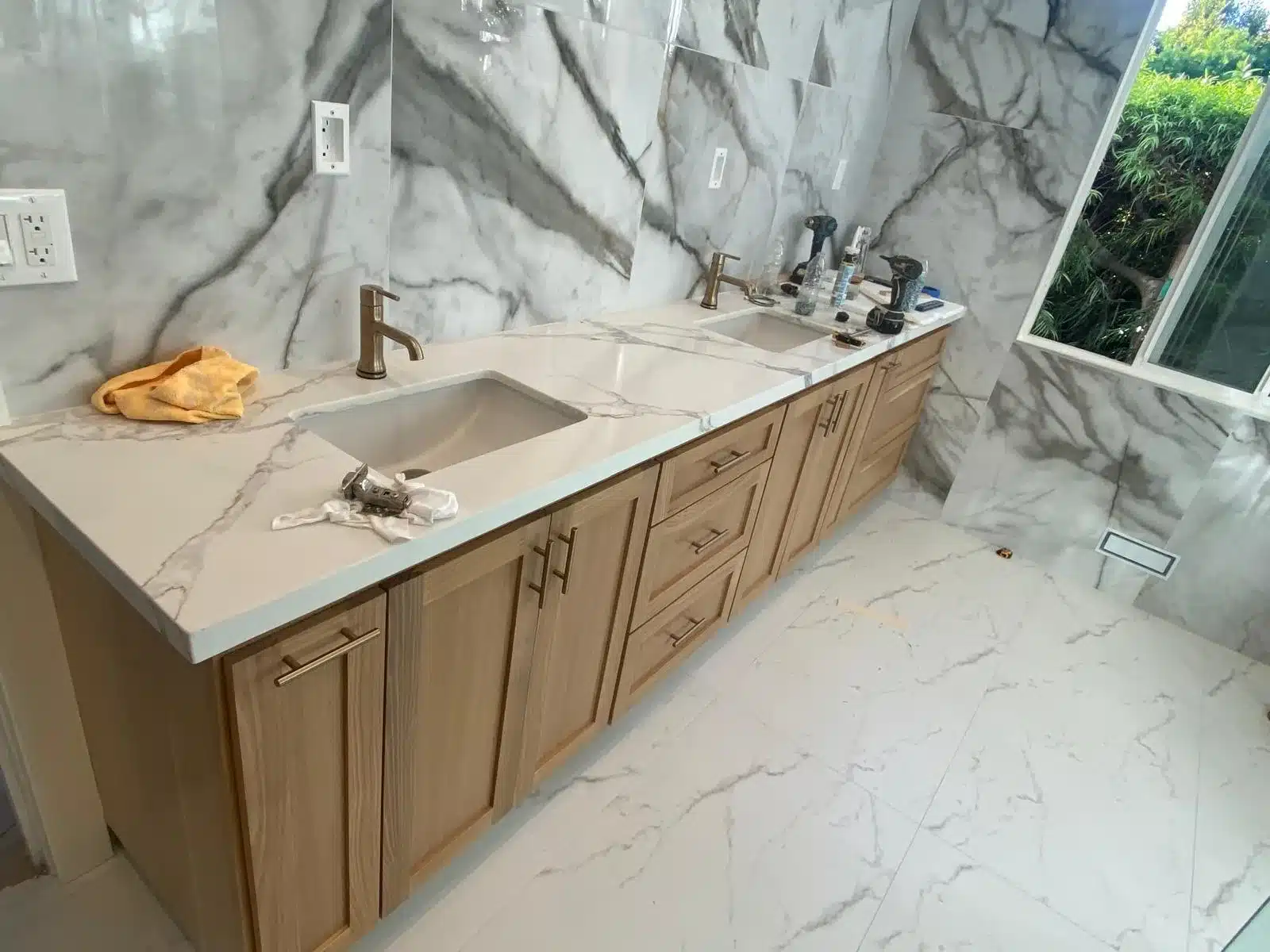
Long wood double vanity with undermount sinks, bronze-tone faucets, and gray-veined walls and countertop.
Southern California Remodeling Insights

How to Compare Remodeling Bids for the Same Job

Get a Free Estimate

To compare remodeling bids, first get both contractors to price the same written scope. Match each included item and resolve missing details before comparing totals.

We review residential projects before demolition, with permit filing first and one licensed contractor coordinating every trade.

Compare remodeling bids by fixing the scope first

Both bidders need the same plans, rooms, retained features, demolition limits, products, and completion standard.

For example, keeping existing cabinets creates a different price basis from replacing them. Tile around a tub also differs from tile covering every bathroom wall.

Individual homeowner discussions describe inconsistent estimates and uncertainty about omitted work. A lower total can reflect fewer included tasks, so identify those differences before judging the price.

Our residential remodeling services include home, kitchen, bathroom, and whole-house remodeling. The proposal should identify exactly which rooms and connecting work fall within your project.

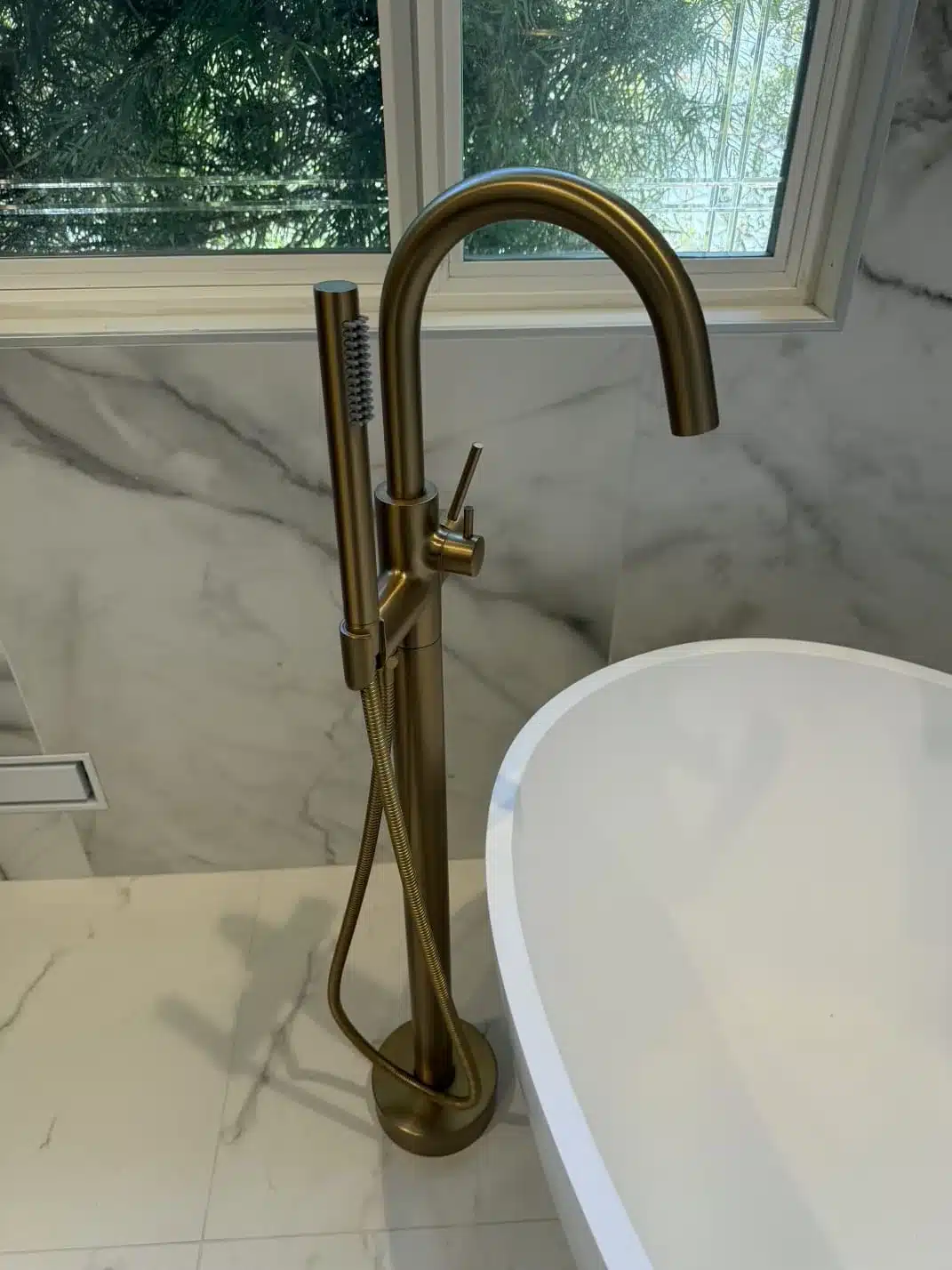
Brass-tone floor-mounted tub filler with handheld shower beside a white tub beneath a window.

Build one line-by-line scope comparison

Place matching work categories beside each other, keeping each contractor’s wording attached to the corresponding category. Proposals can differ in allowances, exclusions, and the stage of completion included in the price.

An omitted item remains unresolved until the contractor explains it in writing.

  • Design documents: Identify the drawing version, written specifications, and responsibility for missing design details.
  • Demolition: Name what comes out and what stays, including cabinets, wall finishes, and existing fixtures.
  • Site protection: Describe protection for retained finishes and occupied areas, including access through the home.
  • Framing: Identify planned framing changes and any structural review needed before removal.
  • Plumbing: Separate pipe changes, fixture connections, and installation responsibilities.
  • Electrical: Identify included wiring, outlets, lighting, and any proposed panel work.
  • Mechanical work: Define heating, cooling, and ventilation changes, including bathroom exhaust work.
  • Finishes: Specify material grades, preparation, waterproofing, tile coverage, and painted surfaces.
  • Fixtures: Identify models, quantities, finishes, purchasing responsibility, and installation.
  • Permits: Assign document preparation, application handling, corrections, fees, and required permit issuance.
  • Inspections: State who schedules visits and handles work needed to address inspection findings.
  • Cleanup: Identify included debris removal and final cleaning separately from demolition labor charges listed elsewhere in the price proposal.
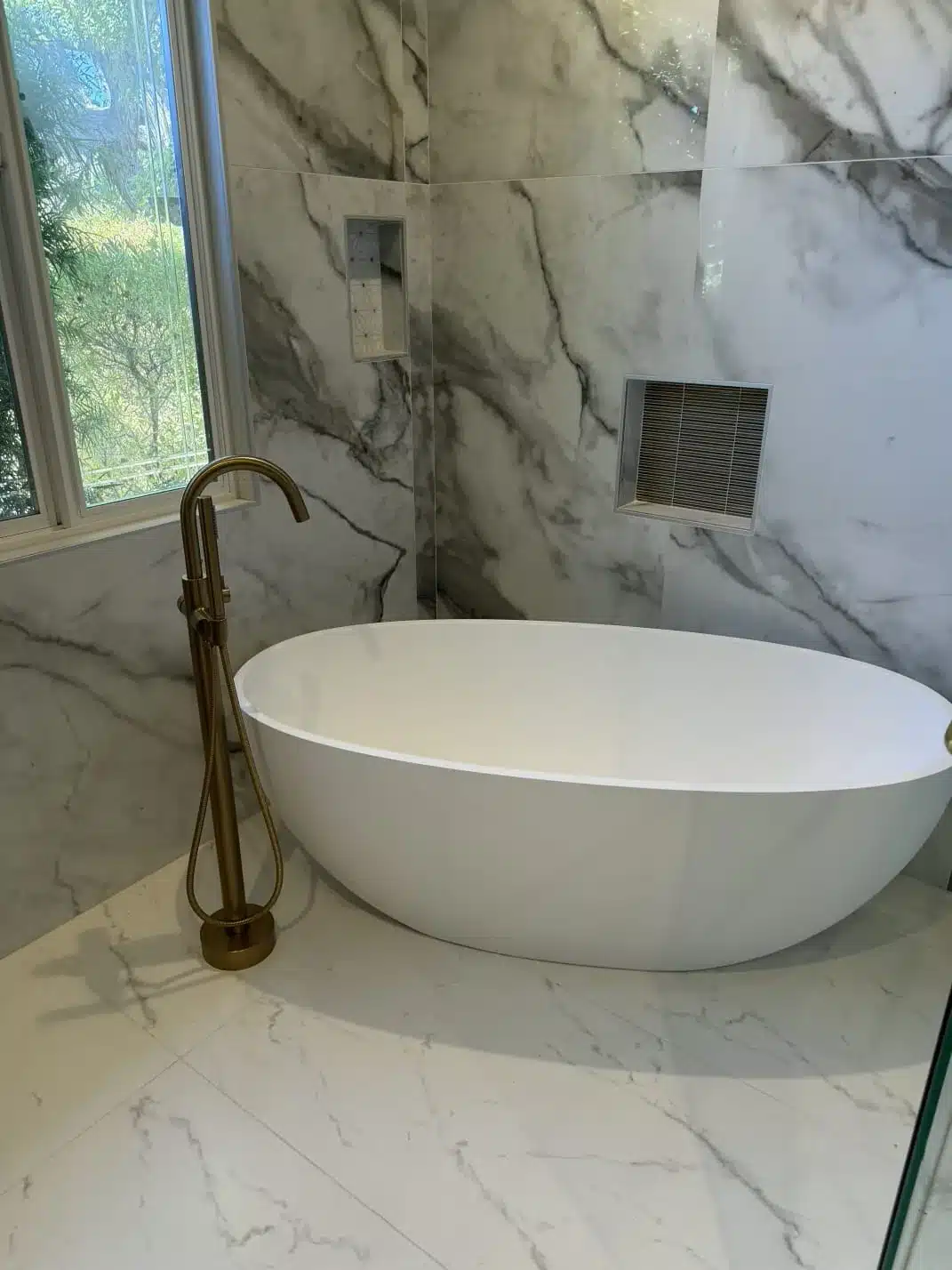
White oval freestanding tub with bronze-tone filler, gray-veined tile walls, recessed niche, and ventilation grille.

Match products, allowances and finish standards

A specified fixture identifies the product being priced; an allowance leaves a selection open.

Compare fixture models, quantities, material grades, waterproofing, tile coverage, and allowances together. A description such as “bathroom tile” leaves the covered surfaces and preparation unclear.

For a double vanity, the scope should identify both sinks and faucets. It should also explain who supplies them and whether installation is included.

A floor-mounted tub filler needs more detail than its finish color. The proposal should connect fixture supply with plumbing preparation and final installation.

For each allowance, ask what the amount covers and how the final selection changes the contract price. Keep unresolved allowances visible when comparing totals.

Find exclusions and homeowner responsibilities

Every excluded task needs an identified responsible party. “Owner supplied” may describe purchasing without explaining delivery or installation.

Compare who supplies fixtures, moves belongings, protects occupied areas, pays identified fees, coordinates access, and handles debris. “By others” needs a named party and a defined task.

We document discovered conditions and communicate them before additional work, with homeowner confirmation required.

A change order records a change to the agreed work. Its pricing and approval process matter when demolition exposes conditions that the original proposal could not fully describe.

Separate permit, trade and site-condition risk

Permit responsibility should cover the path through issuance and inspections. Assign document preparation, application submission, correction responses, permit issuance, and inspection scheduling to identified parties.

Tarzana falls within the City of Los Angeles. Its building department is LADBS, the Los Angeles Department of Building and Safety.

Unincorporated county properties typically fall under LA County DPW, the Los Angeles County Department of Public Works. Check local requirements with the agency responsible for the property.

Filing an application alone does not authorize construction. Work requiring a permit generally must wait until that permit is issued.

One contractor coordinating trades still needs to identify who handles each specialized responsibility.

Older homes may introduce another bid item. The federal Environmental Protection Agency’s Renovation, Repair and Painting program addresses covered paid paint-disturbing work in pre-1978 housing.

Applicable EPA renovation requirements include firm certification, qualified renovators, prescribed practices, education, and records. The proposal should address this scope when it applies.

Compare payment terms, milestones and change procedures

Each payment should identify its due point and the completed work supporting it.

Compare how each proposal defines stages such as framing completion or fixture installation. Also separate agency review from construction scheduling, since permit corrections can affect when work starts.

California’s Contractors State License Board, or CSLB, describes home improvement contract requirements. Covered contracts generally require written scope, payment, and completion arrangements, with signed changes before changed work.

The usual California deposit limit is $1,000 or 10% of the contract price, whichever is less. Special-order materials do not create an exception to that usual limit.

Completion terms should explain the agreed work without treating agency turnaround as a guaranteed date.

Ask for written revisions before choosing a contractor

Send both bidders the same clarification requests and ask for revised written proposals. A verbal assurance leaves the original omission unresolved on paper.

Review the corrected scopes, exclusions, credentials, and responsibility chain before selecting a contractor.

We work directly with homeowners as their residential contractor.

We decline projects that cannot be permitted as described. That makes feasibility part of the scope discussion before a homeowner commits to a particular layout.

Frequently Asked Questions

Why are two remodeling estimates for the same plans so different?

The drawings may match while the assumptions differ. One contractor may price selected fixtures while another carries allowances, leaving the final amount dependent on later choices. The same plans can also leave purchasing responsibilities open. Ask each bidder to explain assumptions that sit outside the drawings before treating the totals as comparable.

Should I show one contractor another contractor’s estimate?

You can compare scope without sharing another contractor’s total. If you share proposal details, focus on unresolved inclusions and responsibilities. A request to clarify missing work gives you more useful information than a request to match a number.

What should I ask when an allowance has no product model or quantity?

Ask the contractor to identify the assumed product category and quantity behind the allowance. Then request its purchasing and installation boundaries. Without a selected model, the amount remains a placeholder. Ask how a later selection affects the written price and whether related installation work changes with that selection.

Is submitting a permit application enough to begin demolition?

No. Ask the contractor to identify the issued permit covering the proposed demolition scope. Also compare how the schedule separates application review from demolition, so a proposed start date does not assume approval.

How do I verify a contractor’s license before signing?

Use the California Contractors State License Board’s license lookup to check the number provided. Compare the listed business name with your proposal and review the current status and classification. We hold California contractor license #1071589. Confirm current records before signing, since a number printed on a proposal cannot show later status changes.

Ready to Plan Your Remodel?

Contact us for a residential scope discussion before demolition. We can discuss written permit responsibilities, trade coordination, allowances, and exclusions for your proposed remodel.

US LA Home Remodeling Inc · 5530 Corbin Ave, Tarzana, CA 91356 · info@uslaremodeling.com