
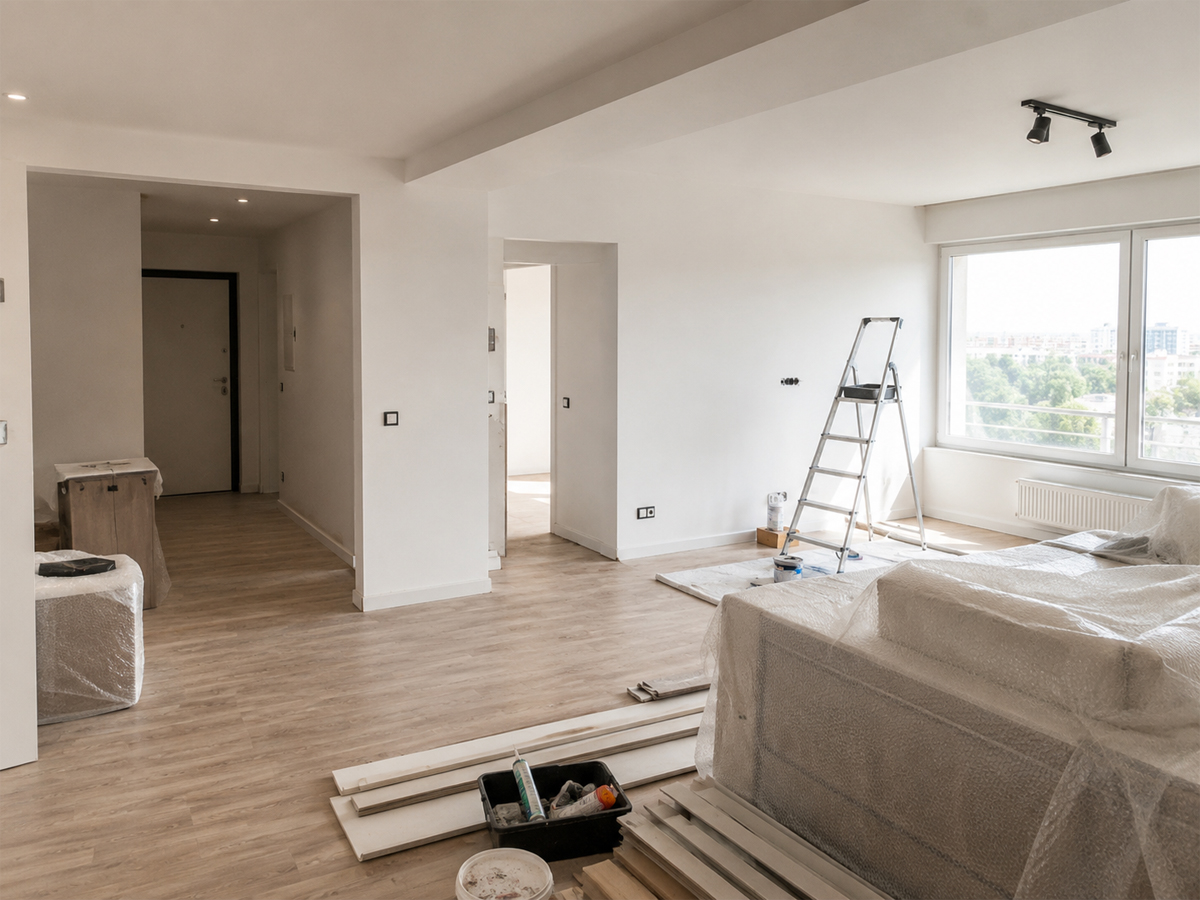
Home remodeling often fails for a reason that has little to do with paint colors, cabinet hardware, tile patterns, or countertop selections. A house can look newly remodeled and still feel frustrating when the original layout continues to interrupt daily life. The finishes may be fresh, the materials may be attractive, and the rooms may photograph well, but the home can still force people to squeeze through tight paths, walk across rooms for basic tasks, store items in the wrong places, or live around awkward walls and doorways.
A successful remodel does not simply make a home look newer. It makes the home work better. The layout is the structure behind every routine: cooking, bathing, cleaning, relaxing, entertaining, working, parking, storing, entering, and moving from one space to another. When that structure stays broken, the remodel only covers the problem.
The real goal is not to decorate around a flawed floor plan. The goal is to identify what the home keeps making difficult, then use remodeling decisions to reduce friction, clarify purpose, improve access, and support the way people actually live.
A broken layout is often invisible during the early design phase because finishes are easier to picture than movement. Homeowners can imagine a new backsplash, a larger shower, a modern vanity, or fresh flooring. It is harder to imagine whether two people can pass each other between the island and refrigerator, whether the bathroom door swing will block the vanity, or whether the dining area will still feel like a hallway after the wall color changes.
That is why surface-first remodeling creates disappointment. The home changes visually, but the daily routine does not improve.
Finishes influence style. Layout influences behavior. A room can have beautiful materials and still fail if the basic relationships are wrong. In a kitchen, the sink, stove, refrigerator, pantry, trash, dishwasher, and prep counters must work together. In a bathroom, the vanity, toilet, shower, doorway, lighting, towel storage, and ventilation must support privacy and movement. In a living area, seating, circulation, light, outlets, and storage must create a clear purpose rather than a leftover space.
When the old layout stays broken, the remodel keeps the same daily obstacles in place. People still bump into each other. Counters still collect clutter because storage is too far away. Rooms still feel dark because the lighting plan follows old ceiling locations instead of actual tasks. Expensive materials cannot compensate for a home that keeps working against its occupants.
Many remodels begin with the assumption that replacing what already exists is safer than questioning whether it belongs there. Cabinets are replaced in the same footprint. Vanities stay in the same corner. Appliances remain where old utilities already sit. Interior walls are patched and painted instead of evaluated. This can be practical in some homes, but it can also lock the original mistake into the new design.
A remodel should begin with a simple question: what part of the home is forcing the household to compromise every day? Without that question, the project risks becoming a better-looking version of the same inconvenience.
Most layout problems are not dramatic. They show up as small frustrations that repeat until they feel normal. A homeowner may not describe the issue as “poor circulation.” They may say the kitchen always feels crowded, the bathroom never has enough storage, the family room is hard to furnish, or the backyard does not get used even though it has space.
Those complaints are often layout symptoms.
A house should have natural pathways. People should be able to enter, unload, cook, clean, gather, and move outside without crossing through the wrong zones. When circulation is poorly planned, the home turns ordinary movement into interruption.
Common signs include:
Guests walk through the cooking area to reach the backyard.
Laundry piles up because storage and folding areas are disconnected.
Bathroom doors collide with drawers, toilets, or hallway traffic.
Kitchen islands are too large for the surrounding clearance.
Living rooms become pass-through spaces instead of places to sit.
Garages become storage traps because access and organization were never planned.
Dark hallways consume square footage without improving privacy or function.
A layout-first remodel studies these patterns before materials are selected. The point is not just to make each room attractive. The point is to help the whole home behave more logically.
A room fails when it does not have a clear job. Dining rooms become overflow offices. Guest rooms become storage rooms. Living rooms become circulation corridors. Garages become piles of seasonal items, tools, and forgotten boxes. The issue is not always lack of square footage. Often, the home has enough space, but the layout does not assign that space well.
A good remodel gives every area a purpose. It considers what should happen there, what needs to be stored nearby, how people enter and exit, how light reaches the room, and whether the space supports privacy or connection. Without that clarity, a remodeled room can still feel unfinished because the household does not know how to use it.
The kitchen is one of the clearest examples of why remodeling fails when the old layout stays broken. A kitchen may receive new cabinets, stone counters, modern lighting, and updated appliances, yet still feel inconvenient if the work zones are scattered.
The old idea of the kitchen triangle can still be useful, but modern kitchens do more than connect the sink, stove, and refrigerator. They support prep, cleanup, storage, small appliances, schoolwork, entertaining, coffee stations, pet feeding, and access to outdoor dining.
A kitchen layout should answer practical questions before style decisions take over. Where do groceries land when someone walks in? Where does food get stored? Is the pantry close to prep and cooking? Can the dishwasher open without blocking a main cabinet? Is there landing space near the refrigerator and oven? Can someone make coffee without standing in the cooking zone?
When those questions are ignored, the remodel may create a kitchen that looks current but functions like the old one. The best kitchen planning studies workflow first, then shapes cabinetry, counters, lighting, and appliance placement around that behavior. That is why homeowners considering kitchen remodels planned around layout, materials, and construction details should evaluate how the room works before focusing on finish combinations.
More space does not automatically make a kitchen better. A larger footprint can create longer walks, oversized islands, disconnected prep areas, and too much unused counter space in the wrong locations. A compact kitchen with thoughtful zones can function better than a large kitchen with scattered appliances.
Cabinetry is part of the floor plan. Drawer banks near prep areas, trash near cleanup, pantry storage near unloading, and cookware near the range all reduce friction. When cabinets are treated only as a style feature, the kitchen may look polished on installation day but become cluttered once real routines return.
Bathrooms punish layout mistakes quickly because every inch matters. A beautiful tile installation cannot fix a shower that feels too narrow, a vanity that blocks movement, or a toilet placed with poor privacy. When the old footprint controls every decision, the remodeled bathroom may look cleaner but still feel uncomfortable.
A bathroom remodel should coordinate movement, grooming, moisture control, and storage. The doorway should not fight the vanity. The shower entry should feel natural. The mirror should be lit for actual use, not just ceiling symmetry. Towels, toiletries, cleaning supplies, and daily products need logical storage.
A bathroom that lacks these basics becomes frustrating even with upgraded fixtures. New materials make the room feel refreshed, but they do not correct the way the room handles daily routines. For that reason, bathroom remodeling that addresses fixtures, tile, lighting, plumbing, and storage should be planned as a complete functional space rather than a collection of replacements.
Preserving plumbing locations can sometimes make sense, especially when the existing arrangement works. But when the toilet, vanity, or shower is poorly placed, avoiding layout changes may protect the wrong thing. The remodel can save disruption in one area while keeping years of inconvenience in another.
The decision should be practical, not automatic. If the existing bathroom layout limits access, privacy, safety, or storage, the plan should at least examine whether a better arrangement is possible.
Open-concept remodeling can improve connection, light, and gathering space. It can also create a room that feels undefined if walls are removed without a living pattern. A successful open layout is not just open. It is organized.
Cooking, dining, relaxing, working, watching television, entertaining, and children’s activities cannot all compete in one undefined area. Without intentional zones, the room may become noisy, cluttered, and hard to furnish. Removing a wall may improve sightlines while eliminating storage, acoustic separation, and privacy.
A better approach creates connection while preserving purpose. Wider openings, partial partitions, ceiling changes, built-ins, lighting zones, and furniture plans can define activity areas without making the home feel closed off.
Wall removal changes how light moves and how rooms are used. Old recessed light locations may no longer align with seating, dining, or prep zones. Switches may be in the wrong place. Outlets may no longer support furniture placement. A true layout remodel adjusts lighting and electrical planning to match the new room behavior.
Adding space can solve real pressure points, but only when the addition improves the entire home. A new bedroom, office, family room, or expanded kitchen can make life easier. It can also create long hallways, awkward transitions, blocked light, or disconnected rooms if the old layout is not corrected first.
A home addition should respond to a specific problem. A growing family may need bedrooms and storage. A remote worker may need privacy and sound control. A household that entertains may need better kitchen, dining, and outdoor flow. A multigenerational household may need a suite with thoughtful access.
The mistake is treating an addition like an attached box. The new space must connect to circulation, natural light, rooflines, floor levels, utilities, and the existing room sequence. Home additions designed around bedrooms, offices, ADUs, kitchens, and outdoor extensions should improve the way the full home operates, not simply increase the room count.
An addition succeeds when it feels like it belongs. That depends on more than exterior materials. Interior transitions matter just as much. Hallways should not feel like tunnels. Floor changes should be intentional. Natural light should not be sacrificed in the original rooms. Mechanical, electrical, and structural planning should support the new use without making the original home feel patched together.
A converted garage or accessory dwelling unit needs more than finished walls and flooring. It needs a complete living logic. Someone using the space should be able to enter, sleep, cook, bathe, store belongings, manage laundry, receive light, control comfort, and maintain privacy without feeling like they are occupying leftover space.
Garage conversions often fail when the design focuses on square footage but delays decisions about entry, windows, bathroom placement, kitchen or kitchenette flow, storage, sound separation, and utilities. These details determine whether the finished space feels comfortable or improvised.
Access is especially important. The path from parking, street, yard, trash area, and main house affects privacy and usability. Garage conversion and ADU services covering design, permits, construction, and inspections are most effective when these relationships are considered early, before finishes hide unresolved layout problems.
A secondary living space should relate to the main home without depending on it. That means thinking carefully about entrances, windows, outdoor boundaries, storage, noise, and shared utilities. When privacy is not designed into the plan, the space may technically function but feel uncomfortable for both the main household and the occupant.
Storage is not a finishing touch. It is part of the layout. A home that lacks storage in the right places will continue to feel cluttered after remodeling because the remodel has not changed the path of belongings.
The best storage plans follow behavior. Cookware belongs near cooking. Dishes belong near cleanup and serving. Towels belong near bathing. Cleaning supplies need safe, accessible locations. Entry items need a place near the door. If storage is too far from the task, people create piles where life actually happens.
Cabinet updates can be a smart choice when the existing cabinet structure already works. For example, cabinet refacing that updates doors, drawer fronts, veneers, finishes, and hardware can refresh a room when the cabinet boxes and general storage layout still support daily use.
If the cabinet layout itself is the problem, new doors will not solve it. Deep lower cabinets may still waste space. Corner cabinets may still be hard to access. Pantry items may still be stored far from prep zones. Upper cabinets may still block light or make a room feel heavy.
The right question is not whether the cabinets can look better. The right question is whether the cabinets help the room function better.
Electrical planning often exposes weak remodeling decisions. If switches, outlets, fixtures, circuits, and task lighting are simply copied from the old layout, the remodel may not support the new way the room is meant to function.
A layout-first remodel plans electrical needs around real use. Kitchen islands may need well-placed outlets. Bathroom mirrors may need lighting that supports grooming. Living rooms may need power based on furniture placement rather than old wall assumptions. Exterior areas may need lighting for safety and evening use. Laundry rooms, offices, and garages may need power where the work actually happens.
That is why electrical work for panel upgrades, rewiring, lighting design, EV chargers, and smart-home systems should be coordinated with layout decisions rather than added after the design is already fixed.
A single ceiling fixture rarely solves a room. Ambient lighting creates general visibility. Task lighting supports work. Accent lighting adds depth. Decorative lighting contributes character. Natural light should be considered alongside all of them.
Kitchen prep zones, bathroom mirrors, desks, laundry counters, and outdoor paths need lighting where tasks occur. When lighting follows a generic ceiling grid instead of the room’s actual use, even high-quality materials can appear flat or poorly installed.
Interior remodeling often fails at the back door. A kitchen may be updated, a dining area may be opened, and a family room may feel brighter, but the yard may remain difficult to reach or awkward to use. When outdoor flow is ignored, the home loses part of its living potential.
Outdoor space should connect to the way the household lives. A patio near the kitchen can support dining. A shaded seating area can extend the family room. Clear walkways can improve access. Lighting can make evening use safer and more comfortable. Planting, privacy, drainage, and hardscape choices all affect whether the yard becomes part of daily life or remains a separate project.
A remodel that respects indoor-outdoor movement can benefit from landscape and hardscape planning for gardens, patios, walkways, retaining walls, lighting, and outdoor living areas, especially when the exterior space needs to support the same routines as the interior.
If guests must pass through the cooking zone to reach the patio, the layout may still be broken. If outdoor dining is too far from the kitchen, it may rarely be used. If the yard has no shade, no path, or no lighting, the interior remodel feels disconnected from the property around it.
The strongest remodels treat the home and yard as connected living zones rather than separate design problems.
A surface-first remodel asks what should be replaced. A layout-first remodel asks what should work better. That difference shapes every decision.
| Remodeling Area | Surface-First Decision | Layout-First Decision |
|---|---|---|
| Kitchen | Replace cabinets and counters in the same positions | Rework prep, cooking, cleanup, storage, and gathering zones |
| Bathroom | Install new tile, vanity, and fixtures | Improve clearance, privacy, lighting, storage, and moisture control |
| Addition | Add another room | Improve circulation and solve pressure points in the existing home |
| Garage or ADU | Finish the shell | Plan independent entry, utilities, privacy, storage, and livability |
| Cabinetry | Change door style or color | Align storage with how the room is used |
| Electrical | Add outlets and lights late | Place power and lighting around the redesigned layout |
| Outdoor Space | Upgrade patio or planting materials | Connect interior movement to exterior living patterns |
The layout-first approach does not mean every wall must move or every system must be replaced. It means every decision should be tested against the home’s real function.
Before selecting finishes, the home should be studied as a set of routines. Where do people enter? Where do items pile up? Where does the household wait, collide, or double back? Which room looks good but does not get used? Which space feels too dark, too exposed, too cramped, or too disconnected?
A cluttered kitchen may not be a storage problem alone. It may be a workflow problem. A rarely used backyard may not be a landscaping problem alone. It may be an access problem. A cramped bathroom may not need only smaller fixtures. It may need a better relationship between door, vanity, shower, and storage.
The strongest remodeling decisions come from identifying the cause beneath the complaint.
Before approving a remodeling plan, homeowners should ask:
What daily frustration should this remodel eliminate?
Which wall, doorway, appliance, fixture, or cabinet placement causes the most friction?
Does the new plan reduce unnecessary steps?
Is storage located where items are used?
Does each room have a clear purpose?
Will lighting support the new layout?
Are electrical, plumbing, and mechanical decisions supporting the design rather than limiting it?
Will the home still function well as household needs change?
These questions keep the remodel grounded in real life. They also prevent the design from becoming a collection of attractive choices that do not solve the original problem.
A remodel fails when the old layout stays broken because the deeper problem survives beneath the new materials. The house may look brighter, newer, and more current, but the daily experience remains compromised. People still work around bad circulation, poor storage, disconnected rooms, weak lighting, and spaces without clear purpose.
A successful remodel does the opposite. It studies how the household moves, where tasks happen, what needs privacy, where storage belongs, how light should behave, and how interior rooms connect to outdoor space. It makes the home easier to live in before making it more impressive to look at.
The most durable remodeling decisions are not always the flashiest. They are the decisions that remove friction. A doorway shifts because the old one blocked movement. A cabinet zone changes because storage was too far from the task. A bathroom layout improves because clearance and privacy matter every day. An addition connects naturally because the existing home was considered, not ignored.
New finishes matter, but they should sit on top of a smarter plan. When the floor plan finally supports real life, the remodel becomes more than a visual upgrade. It becomes a home that works with the people living in it, not against them.
