
Remodeling can transform the way a home functions, feels, and supports daily life, but the process depends on hundreds of decisions happening in the right order. Delays and rework usually do not come from one dramatic mistake. More often, they develop through small planning gaps that compound over time: unclear scope, late selections, incomplete measurements, permit assumptions, missed trade coordination, or decisions made after work has already been installed.
A remodel is not just a collection of tasks. It is a sequence. Framing affects electrical. Electrical affects drywall. Drywall affects cabinetry. Cabinetry affects countertops. Countertops affect plumbing trim, appliances, lighting alignment, and final finishes. When one part of that sequence is rushed or unclear, the result can be stalled progress, repeated labor, and avoidable disruption inside the home.
The strongest remodeling projects are built around clarity before construction, discipline during each phase, and communication that prevents assumptions from becoming expensive corrections. Homeowners do not need to know every technical detail, but they do benefit from understanding where projects most commonly get delayed and what decisions should be resolved before work moves too far forward.
A remodel begins to drift when the project scope is too broad. Phrases like “update the kitchen,” “open up the layout,” or “modernize the bathroom” may describe the desired outcome, but they are not specific enough to guide pricing, ordering, trade scheduling, or inspections. Contractors, designers, and homeowners may all picture something different unless the scope is documented in practical detail.
A complete scope defines what is being removed, what is being built, what materials are being used, which systems are being touched, and which items are excluded. It should also identify who is responsible for selections, permits, inspections, material ordering, debris removal, site protection, and final corrections.
When the scope is unclear, estimates can look comparable even when they represent different levels of work. One proposal may include rough electrical adjustments, drywall patching, and fixture installation. Another may only include surface finishes. One contractor may assume standard materials, while another plans for specialty selections that require additional coordination.
That confusion can lead to change orders once demolition begins and the actual work becomes more visible. Change orders are not automatically a problem. Many remodels involve reasonable adjustments. The issue is when they happen because the initial scope was too vague to describe the real project.
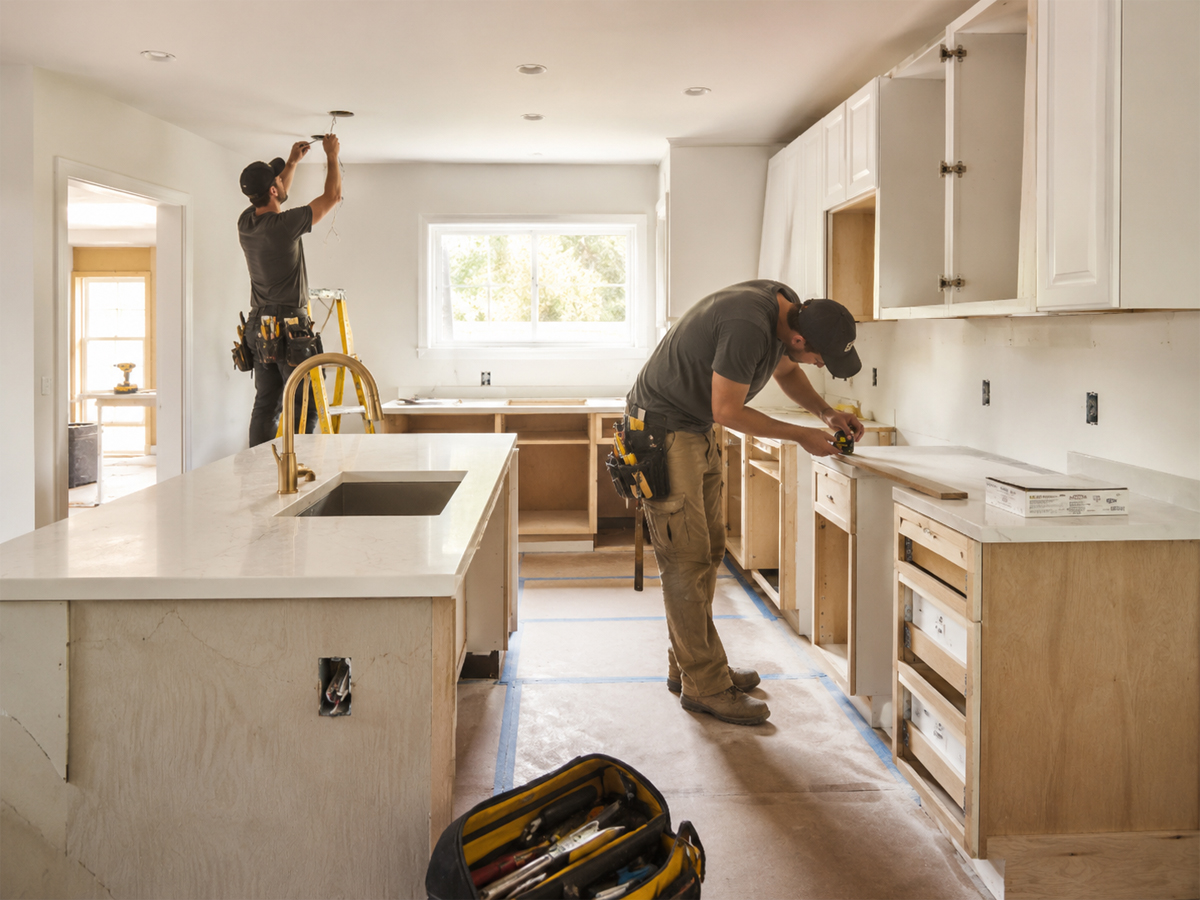
Kitchen remodels are especially sensitive to scope gaps because cabinetry, appliances, plumbing, lighting, ventilation, flooring, and countertops all interact. A refrigerator size can affect cabinet depth. A range location can affect ventilation. A sink change can affect plumbing. A lighting change can affect ceiling work and switch locations.
This is why kitchen layouts, materials, and construction planning should be treated as one connected planning process rather than separate choices made at different stages. When the layout, finishes, and mechanical requirements are aligned early, the remodel is less likely to require corrections after installation has already started.
A reliable remodeling scope should clarify:
Demolition limits and disposal responsibilities.
Wall, ceiling, and flooring changes.
Plumbing, electrical, and ventilation updates.
Fixture, appliance, and finish selections.
Cabinetry dimensions and installation requirements.
Permit and inspection responsibilities.
Change order procedures.
Site protection and cleanup expectations.
Final walkthrough and punch-list process.
The more specific the scope, the easier it becomes to compare bids, order materials, schedule trades, and make decisions without interrupting progress.
A remodel can appear to be moving smoothly during demolition and rough work, but late selections can stop the next phase from starting. Many finish materials and fixtures affect measurements, installation methods, trade coordination, and inspections. Waiting too long to choose them can create gaps between construction stages.
Tile, flooring, vanities, cabinets, lighting, doors, plumbing fixtures, and appliances should not be treated as final decorative choices only. They often determine where walls are opened, where blocking is placed, where outlets are located, where plumbing lines run, and how surfaces are prepared.
A tile selection affects layout, grout spacing, edge details, waterproofing transitions, and drain placement. A vanity selection affects plumbing height, wall backing, mirror size, and lighting alignment. A countertop selection affects sink cutouts, cabinet support, backsplash decisions, and appliance clearance.
Late changes become more disruptive when they conflict with work already completed. If a homeowner changes a shower fixture after rough plumbing, the wall may need to be reopened. If cabinet dimensions change after electrical boxes are installed, outlet locations may no longer meet the intended layout. If flooring thickness changes late, transitions at doors and adjacent rooms may need adjustment.
Bathrooms are compact, moisture-sensitive spaces where trades overlap in a tight area. Plumbing, waterproofing, tile, ventilation, lighting, cabinetry, and finish hardware must be sequenced carefully. Late decisions involving bathroom tile, vanity, plumbing, and lighting upgrades can create rework because each feature affects the next layer of construction.
For example, changing from a standard vanity to a floating vanity after rough plumbing may require relocated drain and supply lines, added wall blocking, drywall repair, and tile layout adjustments. A small design change can move backward through multiple completed steps.
Before demolition begins, homeowners should aim to confirm key items that influence construction. These include cabinet style, appliance specifications, plumbing fixtures, tile format, flooring type, lighting locations, door swings, hardware style, and paint direction. Some details can be refined later, but anything that affects framing, rough-ins, waterproofing, or measurements should be addressed early.
Not every home improvement project requires the same level of approval, but assuming permits are unnecessary can create serious interruptions. Cosmetic updates are different from work that changes structure, plumbing, electrical systems, exterior openings, livable space, or safety conditions.
Permit issues become especially disruptive when work has already been covered. If walls are closed before required inspections, finished surfaces may need to be opened again. If structural work begins without proper documentation, progress can pause until the correct approvals are addressed.
Painting, replacing certain surface finishes, or updating decorative elements may be relatively straightforward. Moving plumbing, modifying electrical circuits, removing walls, changing windows or doors, building additions, converting garages, and altering load-bearing elements require more careful review.
A remodel should identify permit needs before construction begins. This helps prevent confusion during inspections and keeps the sequence aligned with local requirements.
Electrical work is one of the most common areas where rework appears. Modern remodels often involve new lighting layouts, appliance circuits, dedicated outlets, upgraded panels, under-cabinet lighting, bathroom ventilation, smart switches, and exterior power needs.
When a project includes panel upgrades, rewiring, lighting, and appliance circuits, these decisions should be coordinated before drywall, cabinetry, or tile installation. Electrical planning affects safety, usability, inspection readiness, and the final appearance of the space.
Interior remodels are already complex, but additions introduce another layer of planning. Structural requirements, exterior integration, rooflines, foundations, utility connections, insulation, ventilation, and access all influence the construction path.
Projects involving room additions, second stories, and expanded living areas should account for design documentation, engineering coordination, zoning considerations, inspections, and tie-ins to the existing home. Treating an addition like a simple interior update can lead to incomplete planning and avoidable corrections once construction is underway.
Accurate measurements are essential in remodeling, but existing homes rarely behave like new construction drawings. Walls may not be square. Floors may not be level. Old framing may shift. Prior work may be inconsistent. Measurements taken before demolition can change once old finishes, soffits, flooring, or cabinets are removed.
Measurement mistakes affect cabinets, countertops, doors, appliances, tile layouts, plumbing fixtures, mirrors, lighting, and built-ins. A small error can cause major complications if materials have already been ordered or installed.
A single measurement visit is often not enough. Pre-demolition measurements help with planning, but post-demolition verification is critical before ordering items that depend on exact dimensions. Rough-in measurements should be checked before walls close. Cabinet and appliance dimensions should be confirmed before countertop templating.
This layered approach reduces the chance that materials arrive incorrectly sized or that finished work must be altered to make components fit.
Cabinet-related projects need careful evaluation because they interact with walls, floors, appliances, countertops, hardware, and lighting. Even when the goal is to update the existing cabinet appearance rather than fully replace the layout, the condition and dimensions of the original boxes matter.
For example, cabinet refacing with updated doors, veneers, and hardware depends on stable cabinet boxes, accurate door and drawer sizing, suitable surfaces, hinge compatibility, and careful finish coordination. Skipping that review can lead to gaps, alignment issues, or hardware conflicts.
| Measurement Issue | How It Delays Remodeling | Rework Risk | Prevention Step |
|---|---|---|---|
| Appliance dimensions not confirmed | Cabinets or openings may not fit correctly | Cabinet modification or reordered panels | Verify appliance specs before cabinet planning |
| Uneven floors overlooked | Cabinets, tile, or doors may sit unevenly | Shimming, leveling, or finish adjustments | Check floor conditions after demolition |
| Wall surfaces out of square | Countertops and built-ins may not align | Re-templating or installation delays | Field measure before fabrication |
| Fixture locations estimated | Plumbing or lighting may miss the final layout | Reopened walls or relocated boxes | Mark and confirm locations before rough-in |
| Door swings not reviewed | Circulation and clearances may conflict | Hardware or layout changes | Confirm clearances before ordering |
Remodeling existing homes often reveals conditions that were not visible before demolition. Hidden issues do not always mean someone made a mistake. Moisture damage, outdated wiring, nonstandard framing, old plumbing, termite damage, uneven subfloors, and previous unpermitted work can remain concealed for years.
The mistake is not discovering a hidden condition. The mistake is planning as if hidden conditions cannot happen.
A wall may contain outdated wiring that needs correction before it is closed. A bathroom floor may reveal water-damaged subflooring. A kitchen soffit may hide plumbing or ductwork. A garage conversion may expose slab, framing, or utility conditions that require adjustment.
These discoveries can affect the sequence because finished work should not continue over unstable, unsafe, or noncompliant conditions. Addressing them properly protects the remodel from future problems.
A practical remodel includes room for unknowns. This does not mean assuming the worst. It means recognizing that existing homes may require adjustments once hidden surfaces are opened. Homeowners should be prepared to review findings, make informed decisions, and approve necessary corrections based on what is actually present.
Without a contingency mindset, hidden conditions can lead to hesitation, rushed decisions, or incomplete repairs. With a prepared process, the project team can document the issue, explain the options, and move forward without turning every discovery into confusion.
Unavoidable discovery happens when concealed conditions could not reasonably be confirmed before demolition. Preventable rework happens when available information was missed, ignored, or left undocumented.
For example, finding hidden rot behind an old shower wall may be unavoidable. Installing new tile without addressing visible moisture damage is preventable. Discovering old wiring inside a wall may be expected in an older home. Closing the wall before confirming electrical requirements is preventable.
Every remodeling trade depends on the work that comes before it. Demolition prepares the space for framing. Framing establishes locations for plumbing and electrical. Rough trades must be inspected before walls close. Drywall prepares surfaces for tile, cabinetry, paint, and trim. Finish work depends on accurate rough work.
When trades are not coordinated, one missed detail can affect the entire schedule.
A remodel generally follows a logical order: demolition, framing, rough plumbing, rough electrical, HVAC adjustments when needed, inspections, insulation, drywall, waterproofing, tile, flooring, cabinetry, countertops, trim, finish plumbing, finish electrical, paint touch-ups, and final punch-list work.
This order may vary by project, but the principle stays the same. Work should not be covered until the necessary checks are complete. Finish materials should not be installed over unresolved rough conditions.
A missing outlet is easy to correct before drywall. It becomes harder after cabinets, tile, or built-ins are installed. A shower valve set at the wrong depth can affect finished tile and trim installation. A range hood duct that does not align with cabinetry may require ceiling or wall changes.
Trade coordination should include drawings, product specifications, jobsite markings, and walkthroughs before each major phase closes.
Speed does not help if crews are working from outdated information. A contractor, electrician, plumber, cabinet installer, tile installer, and painter may each do good work individually, but the remodel can still suffer if their work is not coordinated.
Clear communication reduces duplicated labor, protects finished surfaces, and helps each trade prepare for the next one.
Choosing a contractor based only on the lowest estimate can create problems when the proposal does not describe the full work required. A low number may exclude permits, demolition, disposal, finish materials, electrical updates, plumbing adjustments, site protection, warranty terms, or cleanup.
A remodeling estimate should be evaluated by scope, clarity, assumptions, responsibilities, and process. The goal is not to choose the most expensive option. The goal is to understand what is included and what is not.
A vague estimate may lead to disagreement once work begins. The homeowner may assume the price includes material pickup, drywall patching, cabinet hardware, or fixture installation. The contractor may have excluded those items. When assumptions differ, delays and change orders follow.
Clear estimates protect both sides because expectations are visible before construction begins.
A reliable remodeling estimate should clarify:
Demolition and debris removal.
Permit and inspection responsibilities.
Labor included by trade.
Material allowances and finish assumptions.
Electrical, plumbing, and structural scope.
Site protection and cleanup.
Change order documentation.
Access, parking, and staging needs.
Warranty or workmanship expectations.
Specificity builds trust. It also makes it easier to make decisions when conditions change during construction.
Garage conversions and accessory dwelling units are often delayed when they are treated like simple room makeovers. A garage was not originally designed to function like a comfortable living space, so the remodel must address code, utilities, insulation, ventilation, fire separation, access, flooring, windows, doors, plumbing, electrical, and exterior conditions.
A garage conversion may require upgrades that are not visible in a finished photo. The space may need insulation, heating and cooling considerations, proper electrical capacity, moisture control, safe exits, and compliant openings. Existing garage slabs, walls, ceilings, and utility routes may influence what is practical.
Because garage conversions and code-compliant ADU builds involve planning, permits, construction, and inspections, they should be approached as full living-space projects rather than cosmetic upgrades.
Plumbing, sewer connections, electrical service, ventilation, and exterior access can influence the order of work. If utility routes are not planned early, finished areas may need to be reopened or exterior surfaces may need to be disturbed later.
ADU-related remodeling benefits from careful coordination between plans and field conditions. The existing structure, slab height, ceiling height, drainage, and access points all matter.
Interior remodeling does not happen in isolation. Deliveries, debris removal, temporary access, drainage, grading, exterior walls, utility lines, and outdoor staging can all affect the construction process. Ignoring exterior conditions can create delays even when the main work is inside the home.
Crews need safe access for materials, tools, debris removal, and equipment. If driveways, gates, walkways, or outdoor areas are not prepared, work can slow down. Site protection also matters because finished landscaping, paving, and outdoor surfaces may be affected by heavy traffic during construction.
When a remodel connects to exterior changes, additions, patios, walkways, retaining walls, or drainage improvements, early landscape and hardscape planning can prevent finished areas from being disturbed after interior work is complete.
Water movement around the home should not be overlooked. Poor drainage can affect foundations, garage conversions, exterior doors, flooring, walls, and moisture-sensitive finishes. If drainage issues are addressed too late, newly completed work may be exposed to avoidable risk.
Coordinating exterior planning with interior remodeling helps protect both the construction process and the finished result.
Even well-planned remodels require decisions during construction. Conditions change, products may need confirmation, and homeowners may refine preferences as the space takes shape. Communication determines whether those decisions are handled smoothly or become sources of conflict.
A quick conversation on site may feel efficient, but verbal approvals can be forgotten or interpreted differently. Important decisions should be documented in writing, especially when they affect cost, layout, materials, inspections, or schedule coordination.
Written approvals do not need to be complicated. A clear message, updated drawing, product specification, or signed change order can prevent confusion later.
Progress walkthroughs are one of the best ways to prevent rework. They help homeowners see decisions before work advances to the next stage. Useful checkpoints include after demolition, after framing, before rough-in inspections, before drywall, before tile, before cabinet installation, before countertop templating, and before final punch-list work.
These walkthroughs should focus on alignment, layout, product locations, access, clearances, and visible quality. Catching an issue while it is still accessible is far better than discovering it after finishes are complete.
Homeowners often assume finish decisions can wait. In reality, many choices affect ordering, rough-ins, and trade scheduling. A remodel should include decision deadlines for fixtures, tile, flooring, cabinetry, hardware, paint direction, appliances, lighting, and specialty items.
Clear deadlines reduce pressure because decisions are made before they become urgent.
Living in the home during remodeling adds another layer of complexity. The construction work itself may be the same, but the logistics are more demanding. Dust control, work zones, noise, parking, material storage, bathroom access, kitchen access, pets, children, and daily routines all need consideration.
A kitchen remodel can disrupt meals, cleaning, storage, and family routines. A bathroom remodel can create access challenges. Entryway or flooring work can affect movement through the home. When these realities are not planned, even normal construction interruptions can feel more disruptive.
A clear occupied-remodel plan should define which areas are off limits, how dust will be contained, where materials will be stored, how workers will access the site, and how homeowners will receive updates.
Clearing work zones, moving valuables, protecting furniture, confirming parking, and keeping pathways accessible can reduce avoidable interruptions. A remodel progresses better when the site is prepared for work each day.
Occupied remodeling requires cooperation. The project team needs clean access to the work area, and the household needs predictable communication about what is happening next.
Many homeowners think quality control happens at the end, during the punch list. In reality, the best quality control happens throughout the project. Waiting until the end makes corrections harder because work has already been covered, finished, painted, sealed, or connected.
Before framing is covered, it should be checked. Before drywall begins, rough plumbing and electrical should be reviewed. Before tile is installed, waterproofing and layout should be confirmed. Before countertops are templated, cabinets should be secure and properly aligned. Before fixtures are installed, finish surfaces should be ready.
This phase-by-phase discipline prevents major corrections from being discovered too late.
A punch list is meant for final refinements: small paint touch-ups, hardware adjustments, trim details, caulking, door alignment, or fixture checks. It should not be the first time major layout, quality, or scope issues are addressed.
When quality control is built into each phase, the final walkthrough becomes a finishing process rather than a recovery effort.
A successful remodel is not built on luck. It is built on a clear scope, accurate measurements, realistic planning, proper permits, timely selections, coordinated trades, and documented communication. Surprises can still happen in existing homes, but a strong process keeps surprises from turning into repeated demolition, stalled work, or avoidable frustration.
The most reliable remodeling approach treats every decision as part of a larger sequence. Design affects construction. Construction affects inspections. Inspections affect finish work. Finish work affects daily usability. When those connections are respected from the beginning, the project is better positioned to move forward with fewer disruptions and a stronger finished result.
